
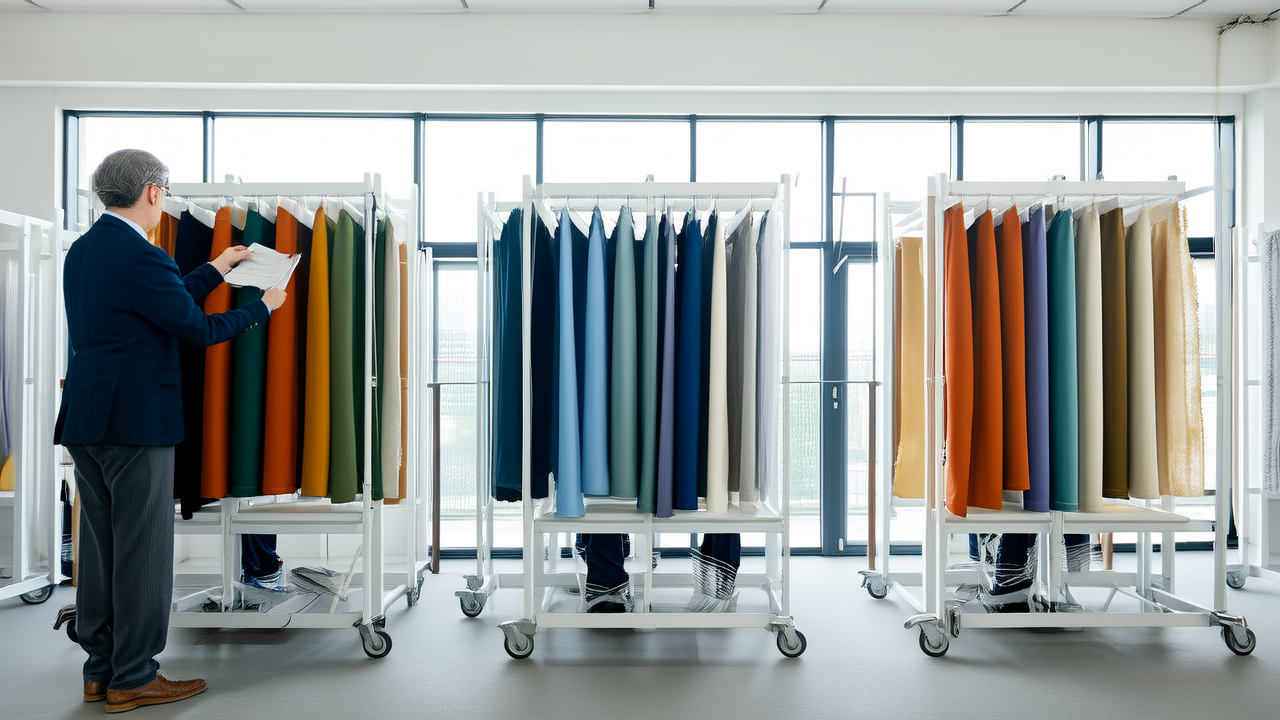
1,038 fabrics, 192 companies, 66.7% in the fashion track, and 33.3% combined in tech and green tracks—these are the numbers from the first 2026 'Keqiao Preferred' review held on April 24 in Shaoxing Keqiao. This review is more than a product selection; it is a mirror reflecting deep shifts in Keqiao's textile industry: functional fabrics penetrating from sportswear into fashion, environmental certifications evolving from a bonus to a baseline, and multi-component blends becoming the standard solution for balancing performance and cost.
Structural Characteristics Revealed by Review Data
Fashion fabrics still dominate, but the combined share of tech and green tracks exceeding one-third marks a notable increase from previous years. Participating companies span weaving, dyeing, home textiles, and curtain fabrics, indicating that the completeness of Keqiao's textile chain is translating into collaborative advantages for product innovation.
Equally significant is the end-use coverage: women's wear, men's wear, children's wear, underwear, sportswear, casual wear, outdoor, and home textiles are all represented. This suggests that Keqiao companies are moving away from single-category specialization toward multi-scenario coverage to diversify market risk. For buyers, this means access to a wider range of sources within one region, reducing cross-regional logistics and communication costs.
Review Focus and Industry Signals Across Three Tracks
In the fashion track, original color patterns and differentiated texture designs dominate, with some companies incorporating intangible cultural heritage into fabric aesthetics and filing patents. The industry implication: intellectual property protection is cascading from apparel brands to fabric suppliers, giving factories with in-house design capability stronger bargaining positions.
The most notable change in the tech track is the standardization of test reports. Multiple review experts noted that companies this year provided more complete and transparent functional indicators and measured data. This is good news for downstream brand buyers—the need for repeated verification of functional claims is reduced. The trend of functional fabrics expanding into fashion is particularly noteworthy, suggesting that technical standards from outdoor sportswear are migrating to everyday wear, potentially creating a new category of 'crossover' products.
The green track's evaluation criteria align with OEKO-TEX® Standard 100, FSC, and GRS certifications. Results show that natural fiber applications have reached high design and craftsmanship levels, with pure wool fabrics praised for softness and pure cotton for natural crepe textures. For foreign trade companies, possessing these certifications lowers technical barriers to entering European and American markets, but it also means certification is shifting from a 'differentiator' to a 'baseline.'
Deeper Logic of Regional Public Brand Building
'Keqiao Preferred,' a key regional public brand for textiles, operates through a complete value chain: from review to brand matching to domestic and international trade show promotion. The 2026 plan includes three end-brand matching events for selected products, plus concentrated exposure at major fairs like Intertextile, Première Vision Paris, Performance Days, and APTEXPO.
For small and medium fabric companies, this is a low-cost opportunity to access high-end procurement channels. However, the review standards are also pushing companies to increase R&D investment and management capability—products without test reports, environmental certifications, or patents will struggle to pass.