
China's textile industry is undergoing a profound brand value restructuring. At the 2026 China Textile Brand Innovation Development Training and Brand Matchmaking Conference held in Keqiao, Shaoxing, on May 7, hundreds of representatives from industry associations, local governments, and leading companies gathered around the core theme of 'Full-Chain Synergy, Value Symbiosis.' The signals from this event are clear and unambiguous: brand building has shifted from point-based breakthroughs to systemic construction, with supply chain collaboration, material innovation, and digital applications becoming the three pillars of brand upgrade.
Macro Direction: Brand Building as Core for Industry Optimization
The Fourth Plenary Session of the 20th Central Committee of the Communist Party of China designated the textile industry as a key sector for 'optimization and upgrading,' positioning brand building as a critical lever to consolidate global industrial division status. Sun Ruizhe, President of the China National Textile and Apparel Council, pointed out in his speech that corporate competition is shifting from point-based games to systemic construction, with synergy and symbiosis becoming the core logic of industrial development. This judgment is based on public industry data: while China's textile exports continue to grow, brand premium capacity still lags behind developed countries, necessitating full-chain collaboration to enhance value chain status.
Song Qi, Standing Committee member of Keqiao District Committee and Deputy District Mayor, clearly outlined the local brand development blueprint: driving textile brands from scale advantage to brand and value advantage. As one of the world's largest textile distribution centers, this statement signals that Keqiao's industrial policies will tilt toward full-chain services such as brand cultivation, trade matchmaking, and intellectual property protection, injecting new growth momentum into the regional industrial belt.
Supply Chain Restructuring: Extending from the Low End of the Smiling Curve
Supply chain collaboration emerged as a core topic of the conference. Mao Yongjun, founder of Lushu Zhengcheng and former Vice President of Anta Group, proposed in his keynote report that brands must break down departmental silos, improve coordination efficiency between product and supply chain ends, and form rational category combinations with efficient management processes. This view directly addresses industry pain points: many textile enterprises remain stuck in low-value-added OEM manufacturing, struggling to extend to R&D and marketing ends.
Mao emphasized that building a brand-driven supply chain requires full-chain linkage from raw materials, R&D, production, to marketing. For example, through data-driven decision-making systems, companies can more accurately match market demand, reducing inventory backlog and waste. This 'systemic construction' thinking is a necessary path for Chinese textile brands to transition from scale advantage to value advantage.
Material Innovation: Technology Empowers Traditional Fabrics and Synthetic Fibers
Material innovation became another key pillar of brand upgrade. Jin Zhixue, R&D Senior Engineer at Fujian Yongrong Jinjiang, shared the innovation path of functional fibers: in response to brand focus on high-performance, high-value-added, and renewable materials, Yongrong Jinjiang built a differentiated nylon product system and collaborated with garment and fabric suppliers to output supply chain solutions. This 'material + brand' synergy model helps create label products with brand DNA, enhancing terminal premium capacity.
Duan Furong, head of the Material Research Institute at Baoxiniao Holdings, proposed two core strategies for material innovation: first, using technology to endow traditional fabrics like cotton, linen, silk, and wool with functions such as machine-washable, cool-touch, and UV protection, rejuvenating classic materials; second, using advanced techniques to make synthetic fibers mimic natural fiber textures while retaining wrinkle resistance and easy care. This 'tradition + technology' path meets consumer demands for both comfort and functionality while providing brands with differentiated selling points.
Diverse Tracks: Rise of New Hanfu and Digital Tools
The new Hanfu segment emerged as a highlight of brand innovation. Li Zhihui, technical advisor at Niannianyouyu (Zhejiang) Culture Technology, showcased how fabric innovation empowers Hanfu brands: by blending and interweaving fibers such as cotton, linen, silk, lyocell, and polyester, the company enhances the silk-like effect and comfort of fabrics, making Hanfu both aesthetically exquisite and convenient to wear. This case demonstrates that the fusion of traditional culture and textile technology can create new consumption growth points.
Digital applications have become a 'standard' for enhancing corporate competitiveness. Wu Peng, deputy director of the Technology Innovation Center at Dongfang International Venture, noted that 3D digital clothing software shows strong advantages in development efficiency, production cost control, and sustainable development. Companies need to establish a data-driven scientific decision-making culture to become leaders in change. Digital tools not only shorten product development cycles but also reduce sample production costs, especially valuable for small and medium-sized foreign trade enterprises.
Industrial Ecosystem: Keqiao Textile Expo Builds Supply-Demand Platform
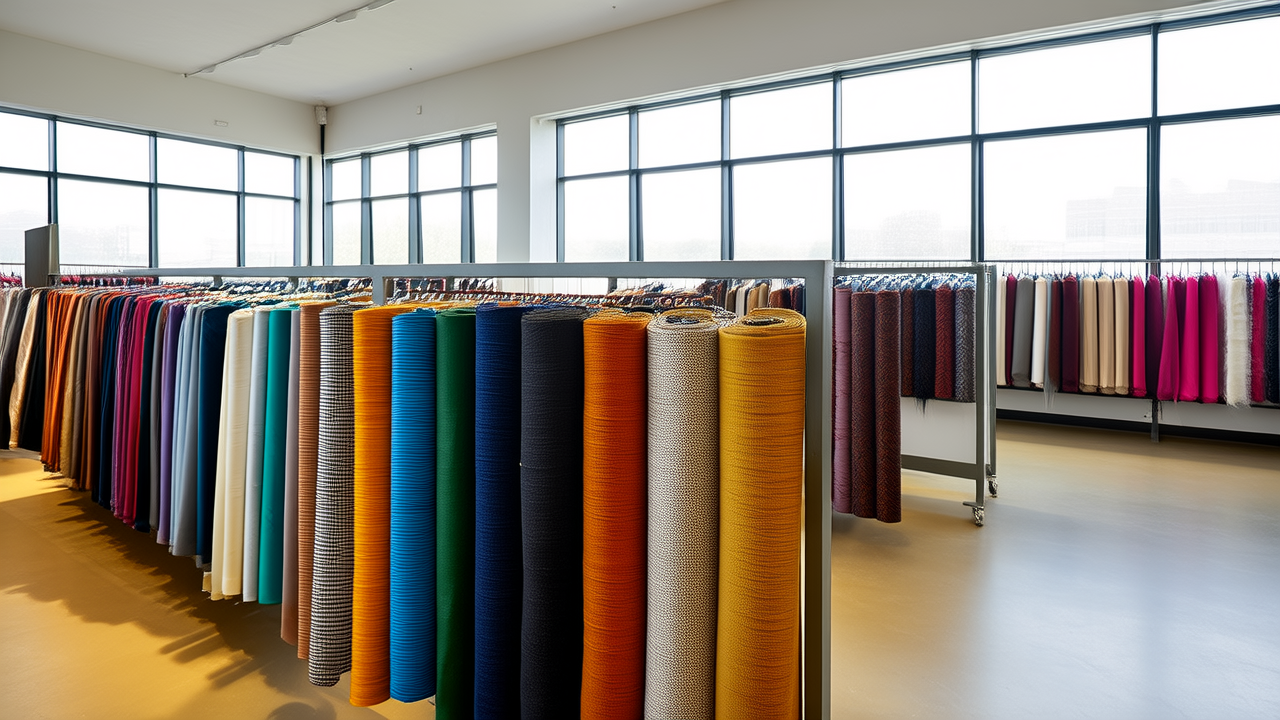
The conference coincided with the opening of the 2026 China Shaoxing Keqiao Textile and Accessories Expo (Spring). With the theme 'Smart Leading New Trends, Chain Synergy for Symbiosis,' the expo gathered over 800 high-quality enterprises covering the entire supply chain from raw materials, yarns, fabrics, design, dyeing and printing, to garments. From eco-friendly fabrics and functional tech apparel to advanced weaving processes and digital application tools, the R&D strength of Keqiao enterprises provided diverse creative design inspiration for brands.
Specialty fabrics such as nylon, modal, acetate, bio-based polyester, and mulberry silk were abundantly available, with the two-way flow of upstream and downstream enterprises bringing the concept of 'full-chain synergy, value symbiosis' into practice. This industrial ecosystem construction helps reduce brand procurement costs and accelerate innovation transformation.