
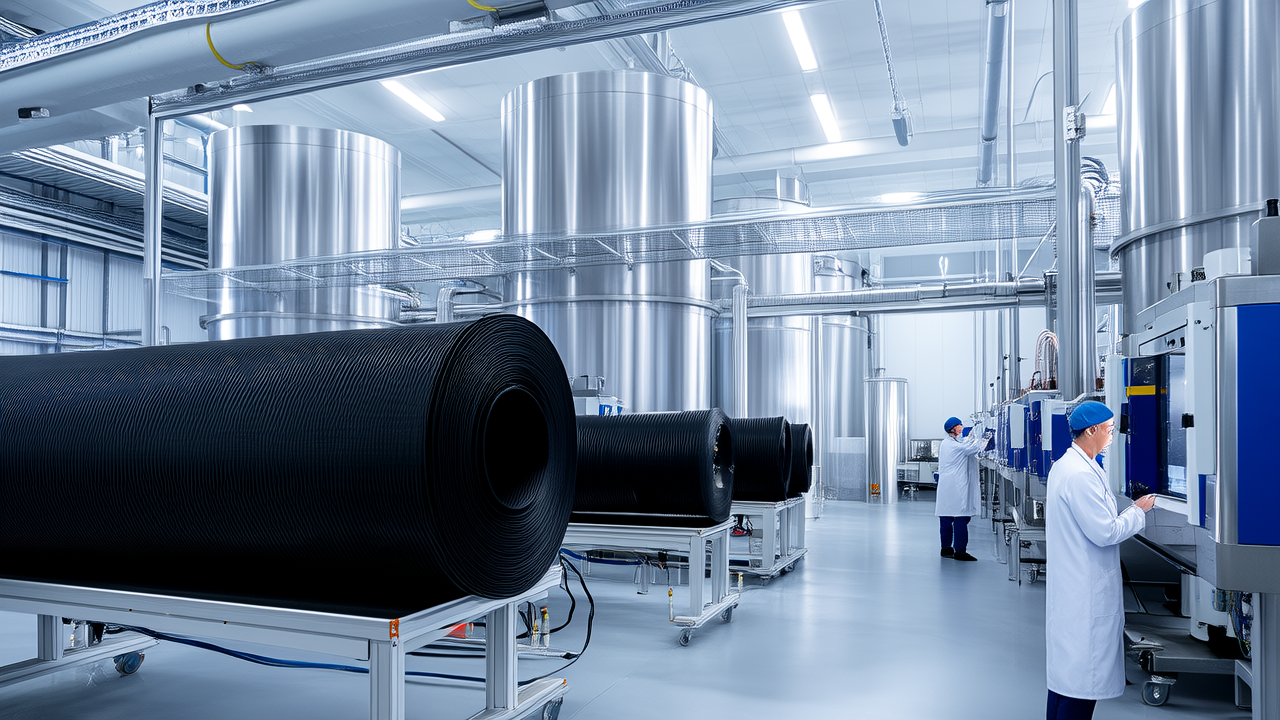
A full-chain carbon fiber collaborative R&D platform—covering precursor, carbonization, equipment, and finished composite applications—is taking shape in Shaoxing, Zhejiang. On May 9, 2026, the High-Performance Carbon Fiber Equipment and Composite Materials Manufacturing Innovation Center technical seminar convened in Keqiao, Shaoxing, bringing together over 40 experts from Tsinghua University, Zhejiang University, Harbin Institute of Technology, and leading industry chain enterprises. The event focused on the center's creation plan and technical roadmap, directly targeting the bid for a National Manufacturing Innovation Center. For China's carbon fiber industry, this marks a critical shift from isolated technology breakthroughs to systemic, full-chain collaborative innovation.
Full-Chain Integration: From Precursor to Application
The center's defining feature is its "full-chain" positioning. According to public information, this is the first carbon fiber R&D platform in China to cover all stages—from precursor production to carbonization, equipment manufacturing, and composite application. Previously, domestic R&D efforts were fragmented across individual links, causing poor upstream-downstream connectivity and limiting the use of high-end carbon fiber in aerospace, rail transit, and other strategic sectors. By integrating the entire technology chain—from source innovation to green recycling—the center aims to bridge the "valley of death" between lab and commercialization.
During the seminar, Li Aijun, President of Jinggong Technology and director of the innovation center, presented the "National Innovation Center Creation Plan and Technical Roadmap," outlining six core directions to break technological bottlenecks. Although the full list is not yet public, industry pain points suggest these likely include high-performance precursor preparation, low-cost carbonization processes, localization of large-scale equipment, composite forming technology, recycling, and intelligent manufacturing. These correspond precisely to China's weakest links: insufficient stability in high-strength, high-modulus products, heavy reliance on imported equipment, and lengthy downstream application validation cycles.
Government-Industry-Academia Collaboration: Shaoxing's Ambition
The choice of Shaoxing is no coincidence. Keqiao District is a traditional textile hub with deep expertise in chemical fibers and new materials, and Jinggong Technology has been a key player in carbon fiber equipment for years. The seminar featured an impressive lineup: Academician Chen Wenxing (President of Zhejiang Sci-Tech University), Academician Li Hejun (Northwestern Polytechnical University, online), Foreign Academician Zhang Jiujun (Chief Scientist of Jinggong Technology), along with representatives from Beijing University of Chemical Technology, Zhejiang Provincial Department of Economy and Information Technology, and local government. This "academician + university + government + enterprise" mix signals that the bid has become a regional industrial strategy.
Notably, 2026 marks the start of China's 15th Five-Year Plan. High-performance carbon fiber and composites are positioned as critical materials for strategic emerging industries such as aerospace, rail transit, new energy, and embodied intelligent systems—directly tied to supply chain security. Establishing a national innovation center at this window aligns with national priorities and gives Shaoxing a competitive edge in the new materials sector. For Jinggong Technology, this is not just a technological upgrade but a strategic pivot from equipment supplier to platform-based innovation hub.
Downstream Ripple Effects on the Industry Chain
The center's establishment will reshape competition in the carbon fiber industry. For upstream precursor and carbonization firms, full-chain collaboration means clearer downstream demand signals—reducing the past dilemma of "producing but not using." For equipment makers, the center will accelerate localization of core machinery like large-scale carbonization furnaces and pre-oxidation furnaces. For downstream composite users, especially in aerospace and new energy, it promises more stable, customized raw material supply and shorter validation cycles.
However, challenges remain. China's carbon fiber sector has long suffered from structural imbalances—low-end overcapacity and high-end shortages. Whether the center can truly break down enterprise-level technical barriers and enable resource sharing depends on its operational mechanism. The seminar's deep discussions, led by Academician Chen Wenxing, already covered positioning, business model, and application expansion, laying a foundation for future implementation.