
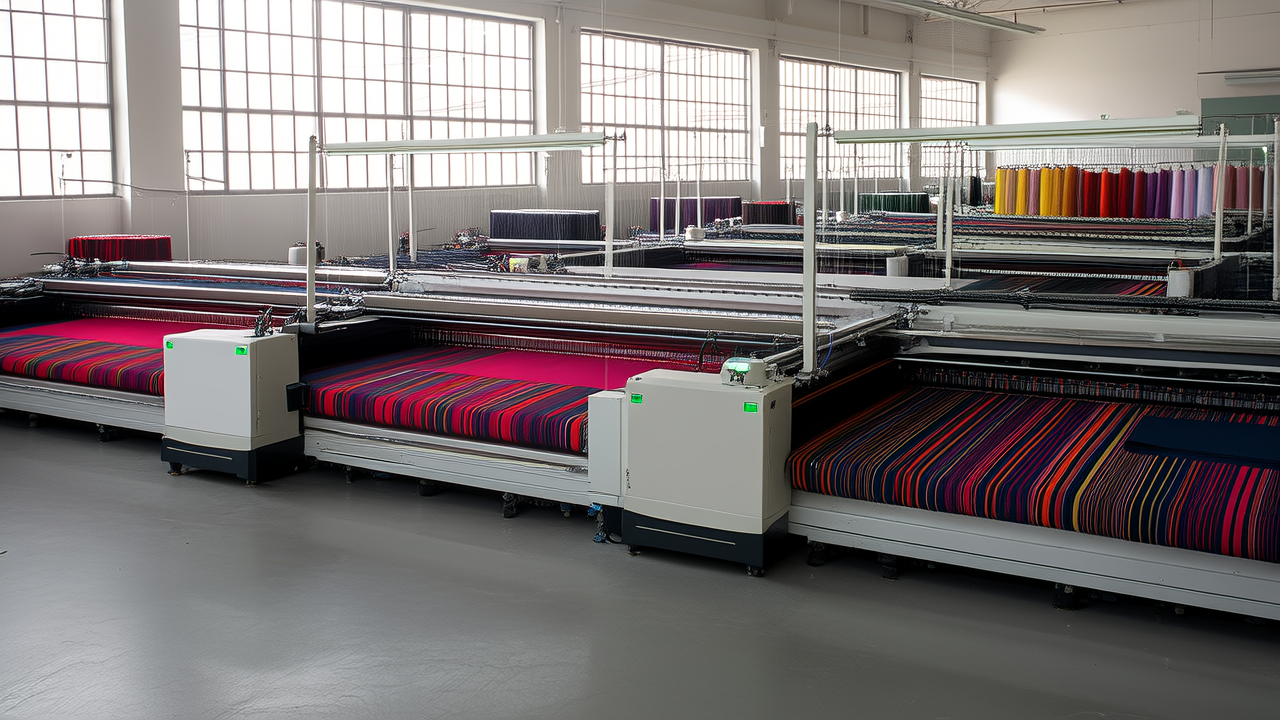
A private company with over 2,000 Party members, 42 years of focus on a single supply chain from oil to fabric, and a zero-carbon park powered by wind and solar—this is not a state-owned enterprise but Fujian-based Hengshen Holding Group. At a closed-door conference in late April jointly organized by an industry body and state media, similar data and cases emerged frequently, revealing a deep shift: Party-building is evolving from a 'political task' for companies into a quantifiable 'competitiveness parameter.'
The Inflection Point from 'Follower' to 'Leader'
Yan Yan, Vice President of the China National Textile and Apparel Council, made a key judgment: the industry is now transitioning from catching up to leading. This is backed by fundamentals—textiles remain a pillar of the national economy, a livelihood industry for common prosperity, and a competitive sector in global trade. But more importantly, the engine of this transition is changing.
The 15 participating companies spanned the entire chain from chemical fiber, spinning, weaving, and dyeing to new materials and branding. Their disclosed investments outline a clear transformation roadmap: Hengshen built a zero-carbon park with renewable energy, Youngor Woolen Fabrics cracked green dyeing and machine-washable fabric technologies, and Sanyuan Holding pushed environmental breakthroughs with 189 invention patents, with its industrial wastewater recycling project promoted by the Ministry of Industry and Information Technology. These investments are no longer isolated 'tech upgrades' but are integrated into a systematic framework of deep Party-building and business integration.
Making Party-Building 'Real': From Organizational Coverage to Efficiency Revolution
The most striking element at the conference was not slogans but verifiable organizational behavior. Liu Qiwu, Party Committee member of Sanyuan Holding, noted that all 13 subsidiaries have simultaneously strengthened their Party branches, with management taking the lead in joining and contributing ideas. This organizational extension directly translates into decision-making efficiency—enabling the 'concentrate resources to tackle major tasks' mechanism in environmental protection and new material R&D.
Shepherd Garment's case demonstrates Party-building's push for digitalization. General Manager Zheng Qi used Party-building to drive digital transformation, independently developing NAO virtual weaving technology and building a smart factory. When 'virtual weaving' meets 'Party member pioneer posts,' the cycle for technological breakthroughs is significantly shortened. Xingwu Worsted similarly built a dye intelligent conveying system under the Party-building framework, achieving full-process digital control and becoming a benchmark in the worsted dyeing sector.
Organizational Resilience Behind 'Specialization and Innovation'
Another notable signal is that multiple companies emphasized 'sticking to the real economy' and 'long-termism.' Sande Textile Chairman Zhang Zilong used Party-building to cultivate craftsmanship, focusing on high-end woolen fabrics and breaking through wool windproof and waterproof technologies. Xingmao Zhishang deepens its specialization in tweed, cooperating with international luxury brands and using nano-coating and digital fabric labs to seize fashion discourse power. These companies share a common trait: achieving excellence in niche segments, with Party-building described as the core mechanism for 'maintaining focus in a complex environment.'
Shixiang Bio Chairman Xu Xiaolin's view is more impactful: by optimizing raw materials and innovating processes, they carved a differentiated path in vortex spinning and open-end spinning, directly breaking the 'saturated textile market' mindset. This means Party-building-driven innovation goes beyond technology to reshape market perception.
Industry Signals Ahead of the '15th Five-Year Plan'
Facing the '15th Five-Year Plan,' the conference's landing point is clear: brand building requires sustained effort, and long-term investment under Party-building guidance is the foundation for Chinese brands to go global. Li Bo, Director of the China Textile Information Center, emphasized in his summary that Party-building is a tangible force for productivity, competitiveness, and cohesion. The subtext: amid complex external environments and domestic structural upgrades, organizational advantages are becoming the 'anchor' for the industry to navigate uncertainty.
Evidence of this conversion already exists. Among the 15 companies, more than half hold over a hundred invention patents, and several have had zero-carbon or circular economy projects promoted at the national level. When Party-building shifts from 'meetings and study' to 'project execution,' and from 'organizational coverage' to 'efficiency revolution,' the 'great power' narrative of the textile industry gains quantifiable support.