
Brand building is shifting from a "plus factor" to a "survival factor" for enterprises. With the textile industry designated as a key sector for "optimization and upgrade" by the Fourth Plenary Session of the 20th CPC Central Committee, the industry's perception of brand value is undergoing a fundamental transformation—it is no longer just about logos or marketing strategies, but a systematic project that runs through the entire chain from raw materials to R&D, production, and marketing.
On May 7, the 2026 China Textile Brand Innovation Development Training and Brand Matchmaking Conference was held in Shaoxing Keqiao, moderated by Qi Mei. The event gathered leaders from industry associations, Keqiao district government, and several top enterprises. Sun Ruizhe, President of the China National Textile and Apparel Council (CNTAC), made a key observation: enterprise competition is shifting from point-to-point gaming to system building, and collaboration and symbiosis have become the core logic of industrial development. This means that single-point breakthroughs are no longer sufficient; brands need to find their ecological niche within industrial integration.
Supply Chain Restructuring: The Underlying Logic of Brand Upgrade
Song Qi, Deputy District Mayor of Keqiao, clearly stated the local government's stance: promoting the textile brand transition from scale advantage to brand advantage and value advantage. This is grounded in Keqiao's reality as the world's largest textile distribution center—when production capacity is no longer scarce, brand premium becomes the key variable for differentiation.
Mao Yongjun, former Vice President of Anta Group and founder of Lushu Zhengcheng, raised a sharp point: brands must break down departmental silos to improve synergy between product and supply chain ends. The path he outlined involves forming a reasonable category mix, leading story points, effective management processes, and a matching supply chain ecosystem. The logic is clear: only when the supply chain end and brand end are truly connected can enterprises move to both ends of the "smile curve" instead of being trapped in the low-profit manufacturing zone.
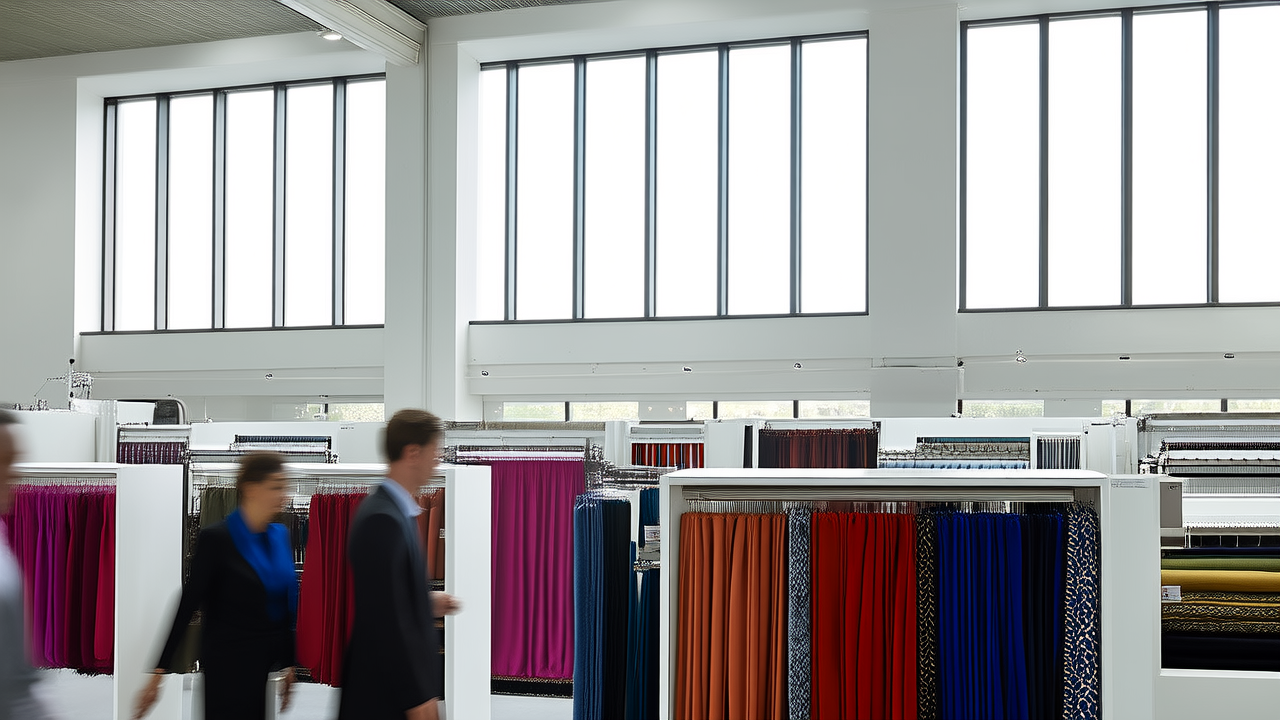
Concurrently, the Keqiao Textile Expo opened, gathering over 800 exhibitors covering the entire industry chain from raw materials, yarns, and fabrics to design, dyeing, and garment production. This number itself is a signal: enterprises in the industrial chain are actively seeking collaboration rather than fighting alone.
Material Innovation: From Function Stacking to Value Recreation
Jin Zhixue, R&D engineer at Fujian Yongrong Jinjiang, revealed a trend: demand for high-performance, high value-added, and renewable materials is exploding. Yongrong Jinjiang's response is to build a differentiated nylon product system and collaborate with garment and fabric suppliers to output supply chain solutions, creating label products with brand genes. This means material suppliers are no longer just providing raw materials but are deeply involved in the brand's R&D process.
Duan Furong, head of the Materials Research Institute at Baoxiniao Holdings, introduced innovation in the opposite direction: using technology to add machine-washable, cooling, and UV-protection functions to traditional fabrics like cotton, linen, silk, and wool, giving classic fabrics new life. At the same time, advanced technology is used to make synthetic fibers mimic the texture of natural fibers while retaining wrinkle resistance and easy-care properties. This "two-way empowerment" essentially redefines fabric cost-performance—not just cheapness, but a balance of function and experience.
Diverse Tracks: From Hanfu to Digitalization, New Growth Poles
Li Zhihui, technical advisor at Niannianyouyu (Zhejiang) Culture Technology Co., brought insights into the "New Hanfu" track. By blending cotton, linen, silk, lyocell, and polyester fibers, the company improved the silk-like effect and comfort of fabrics, transforming Hanfu from a "cultural symbol" into "everyday wear." Behind this is a rapidly expanding market: Gen Z consumers' enthusiasm for Chinese-style trends is forcing fabric companies to offer products more suited to modern wearing habits.
Wu Peng, deputy director of the Technology Innovation Center at Dongfang International Venture Co., emphasized the value of 3D digital clothing software. He noted that this tool has become a "standard" for optimizing supply chains and enhancing core competitiveness, showing strong advantages in development efficiency, production cost control, and sustainable development. For enterprises, this means building a data-driven scientific decision-making culture rather than relying on intuition.
Yao Weiming, a textile science communicator from Dymatic Chemicals, offered a method for brand storytelling in the new media era: mining product differentiation points from grading indicators, actual experience, and functional directions, with high-quality content being the core way to form long-tail effects. Simply put, good products need to tell a story, but the story must be based on verifiable data and experience.
Practical Recommendations
For Buyers - Focus on supply chain synergy: Prioritize suppliers offering integrated solutions from raw materials to finished garments, which can significantly shorten development cycles and reduce communication costs. - Value material innovation: When selecting products, look beyond "newness" and verify whether the functions are testable and if the product carries replicable brand genes. - Leverage trade fairs: Full-chain expos like the Keqiao Textile Expo are efficient channels for quickly connecting with quality suppliers and spotting market trends.
For Foreign Trade Enterprises - Shift from "OEM" to "collaboration": Actively demonstrate your supply chain integration capabilities to international brands, rather than just emphasizing capacity and price advantages. - Embrace digital tools: 3D digital software not only improves development efficiency but also enables remote visual communication of product details, reducing sample shipping costs. - Tell brand stories: Even as OEM/ODM providers, use material innovation and process upgrades to offer overseas clients value-added, "labeled" products.
Full-chain collaboration is not a slogan; it is the key path for Chinese textile brands to find certainty amidst uncertainty. When over 800 enterprises connect upstream and downstream face-to-face at one expo, and when material suppliers, brand owners, and digital service providers exchange ideas at the same training session, the industry is proving through action that brand value leap begins with the active connection of every node in the chain.