
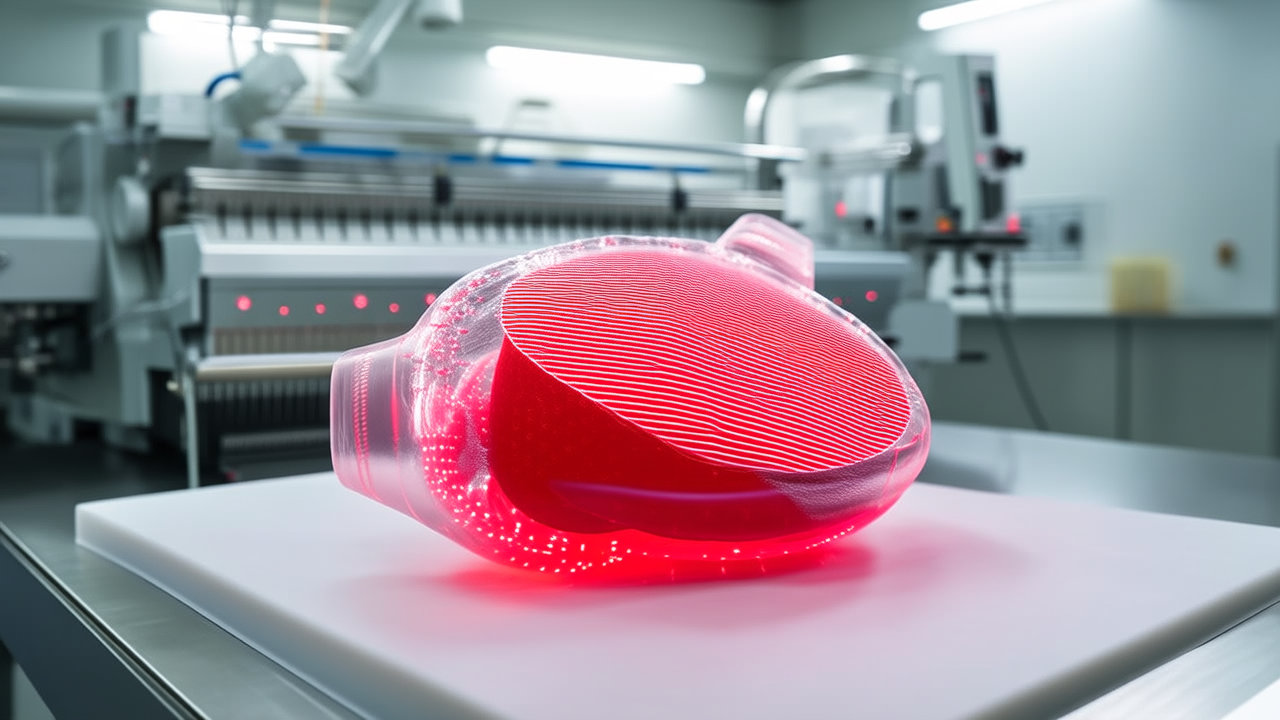
A fabric as thin as a cicada's wing, pressed onto a heart for 60 seconds, can rebuild broken electrical pathways—this is not science fiction but a real product unveiled at the 2026 China International Textile Fabrics & Accessories (Spring/Summer) Expo. Donghua University's sutureless 3D conductive cardiac patch is pulling the textile industry out of the old 'making clothes' narrative and into the new track of 'making organs.'
For the textile sector, this is more than a technical breakthrough; it marks a clear path for industrial chain upgrading. The global medical textile market exceeded $320 billion in 2025, with China's market surpassing 85 billion yuan, growing at over 10% CAGR. Among segments, implantable and therapeutic high-end materials are growing fastest, far outpacing traditional protective products.
From Fiber to Life: The Technology Leap Behind a Patch
The core technology of this cardiac patch stems from a deep transformation of textile processes. The team used warp knitting to create a honeycomb mesh structure, giving the patch mechanical anisotropy that matches natural heart tissue—providing support without hindering contraction and relaxation.
More critical is the conductive fiber weaving. The patch incorporates a 3D conductive fiber network, with micron-scale conductive 'barbs' on the surface that penetrate the epicardium and scar tissue without sutures. Animal experiments show significant improvement in heart function within three days of implantation. This means traditional textile steps—weaving, knitting, finishing—are being redefined as 'precision life-support manufacturing.'
The cross-border evolution from fiber to life didn't happen overnight. Donghua's team spent six years breaking through barriers in conductive polymer fiber spinning, 3D microstructure weaving, and bio-interface modification to turn a 'fabric' into a medical device that repairs the heart's 'circuit.'
The Golden Window for Medical Textiles: China's Natural Advantage
China's textile industry boasts the world's most complete supply chain and large-scale manufacturing capacity—the biggest trump card for entering the medical textile field. From chemical fiber raw materials to weaving and dyeing, every link can be customized for medical materials. For instance, the conductive fibers used in the cardiac patch are essentially functional modifications of traditional chemical fibers, sharing similar spinning processes with ordinary polyester or nylon, but requiring higher precision and purity.
An aging population, rising healthcare spending, and policy support create a triple boost for medical textiles. China reports about 1 million new acute myocardial infarctions annually, with infarcted myocardium forming non-conductive scar tissue—like a 'broken circuit'—leading to a 71% heart failure rate within five years. This huge clinical demand translates directly into a rigid need for high-performance textile materials.
For textile companies, this means a shift from 'volume' to 'technology.' Traditional fabric gross margins may hover around 10%, while high-end medical textile margins can exceed 50%. Once technical barriers are established, customer stickiness is extremely high.
From Patch to Product Matrix: Multi-Scene Application of Textile Tech
Donghua's layout is not an isolated case. The team has built a core product matrix including medical sutures, ureteral stents, diabetic wound dressings, and the conductive cardiac patch—all developed on the same textile technology platform. This 'one process, multiple applications' model is the typical path for textiles extending into medical fields.
Notably, these products are not simple 'fabric repurposing'; they involve full-process redesign from fiber design, weaving structure, to surface treatment. For example, medical sutures must meet three strict standards: biocompatibility, mechanical adaptability, and functional specificity—completely different from ordinary sewing thread requirements.
Looking ahead, smart sensing, drug release, and tissue engineering will further integrate with textiles. The team has reportedly started developing a '2.0' smart patch that incorporates targeted drug release, creating a comprehensive treatment platform combining electrical signal repair, mechanical support, and precise drug delivery.
Practical Advice
For Buyers - Focus on certification timelines: Medical textile products typically take 3-5 years from lab to clinic; early engagement with R&D teams can secure first-mover advantages. - Prioritize suppliers with complete supply chains: Medical materials demand high batch consistency; companies with in-house fiber production lines are more reliable. - Evaluate technology transfer capability: Look beyond the product itself; assess whether the team has full technical reserves from fiber modification to weaving processes.
For Foreign Trade Companies - Target medical infrastructure projects in Southeast Asia and the Middle East: These regions are importing large volumes of medical textiles but rely on European and American suppliers for high-end products—Chinese products offer clear cost advantages. - Establish joint development mechanisms with universities and hospitals: Export barriers for medical textiles lie in certification and clinical data; collaborating with research institutions can accelerate this process. - Monitor EU MDR regulations and US FDA 510(k) pathways: Prepare compliance systems early to avoid post-launch returns or litigation risks.
The textile industry's next growth engine is not on fashion runways but in operating rooms. When a 'fabric' can repair a heart, the industry's ceiling is shattered.