
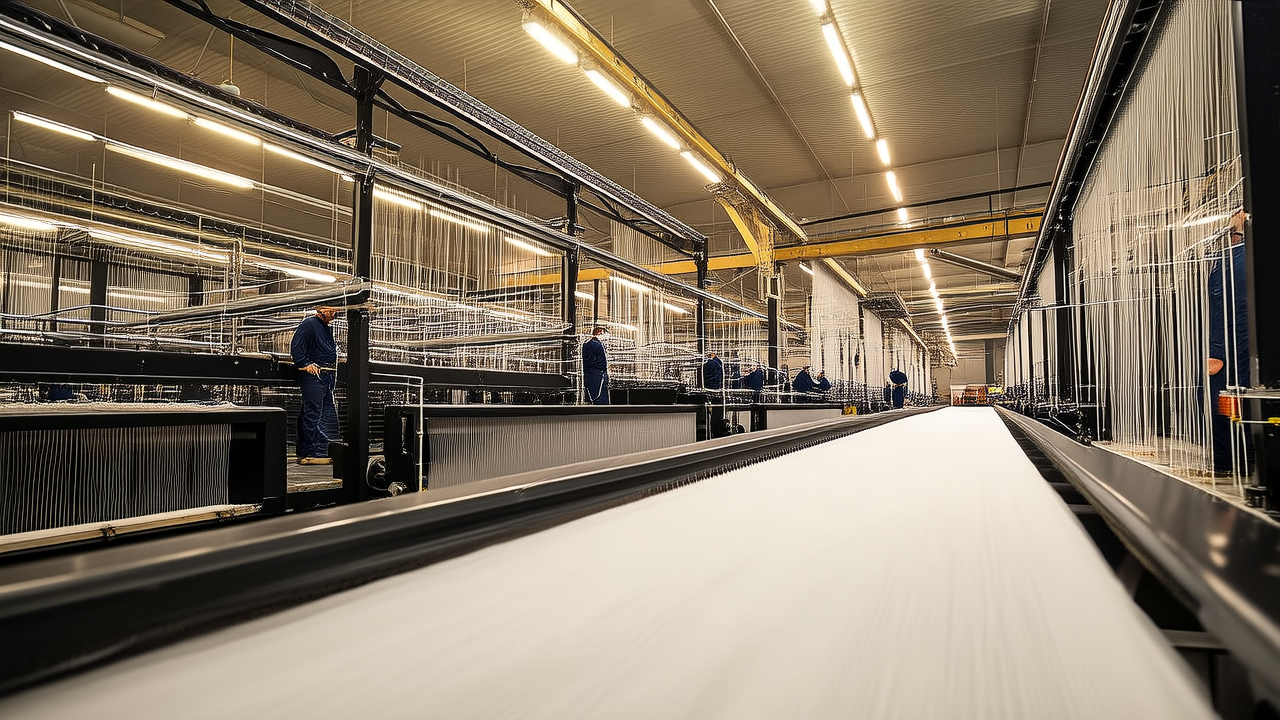
In April, China exported $12.705 billion in textile yarn, fabric, and products, bringing the January-April cumulative total to $46.896 billion, up 2.3% year-on-year. Meanwhile, apparel exports during the same period reached $44.231 billion, down 0.9%. These two sets of data clearly reveal a structural divergence in textile foreign trade: intermediates are strengthening while finished products are under pressure.
Why Textile Intermediates Are Bucking the Trend
The resilience of textile intermediates is no accident. Products like yarn and fabric benefit from mature technology and well-established domestic supply chains, enabling stable support for global weaving manufacturers. When production capacity fluctuates in some Southeast Asian regions, overseas buyers increasingly turn to high-quality, reliably delivered products from China, directly driving the growth of intermediate exports. Public customs data shows that in the same period of 2025, textile intermediate exports stood at $45.836 billion; this year's increase of $1.06 billion signals sustained, order-backed growth rather than a short-term spike.
In contrast, apparel exports face clear headwinds. Weak global consumer markets, slowing destocking by overseas apparel brands, and contracting new orders all contribute to pressure. Competition from low-end apparel capacity in Southeast Asia further squeezes China's labor-intensive garment exports. However, the decline is narrowing from a larger drop earlier in the year to the current 0.9%, indicating underlying resilience in the apparel sector and no cliff-like downturn.
Imports Surge 19.1%: A Clear Signal of Production Revival
Import data offers another window into the textile industry's vitality. From January to April 2026, China imported $3.774 billion in textile yarn, fabric, and products, a sharp 19.1% increase compared to $3.170 billion in the same period of 2025. This growth directly reflects accelerated production resumption and capacity release among domestic textile enterprises.
As downstream weaving and garment manufacturers release concentrated restocking demand, coupled with steady recovery in the domestic market, demand for imported high-end fabrics and specialty yarns has risen significantly. The high import growth indicates that the upstream and downstream of the domestic textile chain are operating at fuller capacity, with production vitality returning. For buyers, this means ample domestic supply but also potentially intensified competition for raw materials, requiring a reassessment of pricing dynamics.
Oil Breaks $100: Cost Shock Spreads from Chemical Fibers to the Entire Chain
On May 11, WTI crude oil prices once again breached the $100 per barrel mark, rising 4.8% intraday. Geopolitical tensions and global supply concerns continue to intensify, presenting a cost variable that the textile industry cannot ignore. Oil is the core upstream raw material for chemical fibers; higher prices directly increase procurement costs for polyester, nylon, and other chemical fiber raw materials, which are central to textile production.
The cost shock does not stop at chemical fibers. Higher oil prices simultaneously drive up costs across weaving, dyeing and finishing, and logistics. Each incremental cost increase ultimately cascades into final product prices, squeezing corporate profit margins. Small and medium-sized enterprises face widespread cost management challenges, with mounting profitability pressures. For export companies, balancing rising costs with order prices will be a core challenge in the second quarter and beyond.
Trend Outlook: Divergence to Continue, but Structure Is Optimizing
Overall, the textile trade data for the first four months of 2026 reveals several key trends. First, the strength of intermediate exports is unlikely to reverse in the near term; the stability and quality advantages of China's supply chain remain a ballast for global procurement. Second, the adjustment in apparel exports may persist, but narrowing declines suggest a bottom is approaching. Third, surging imports indicate robust domestic demand, which benefits upstream raw material suppliers but adds cost pressure for downstream garment factories.
Crude oil price volatility is the biggest uncertainty. If oil remains above $100, chemical fiber costs will rise significantly, affecting profit distribution across the entire textile chain. Companies should lock in raw material prices and manage inventory proactively to avoid sudden cost spikes impacting cash flow.