
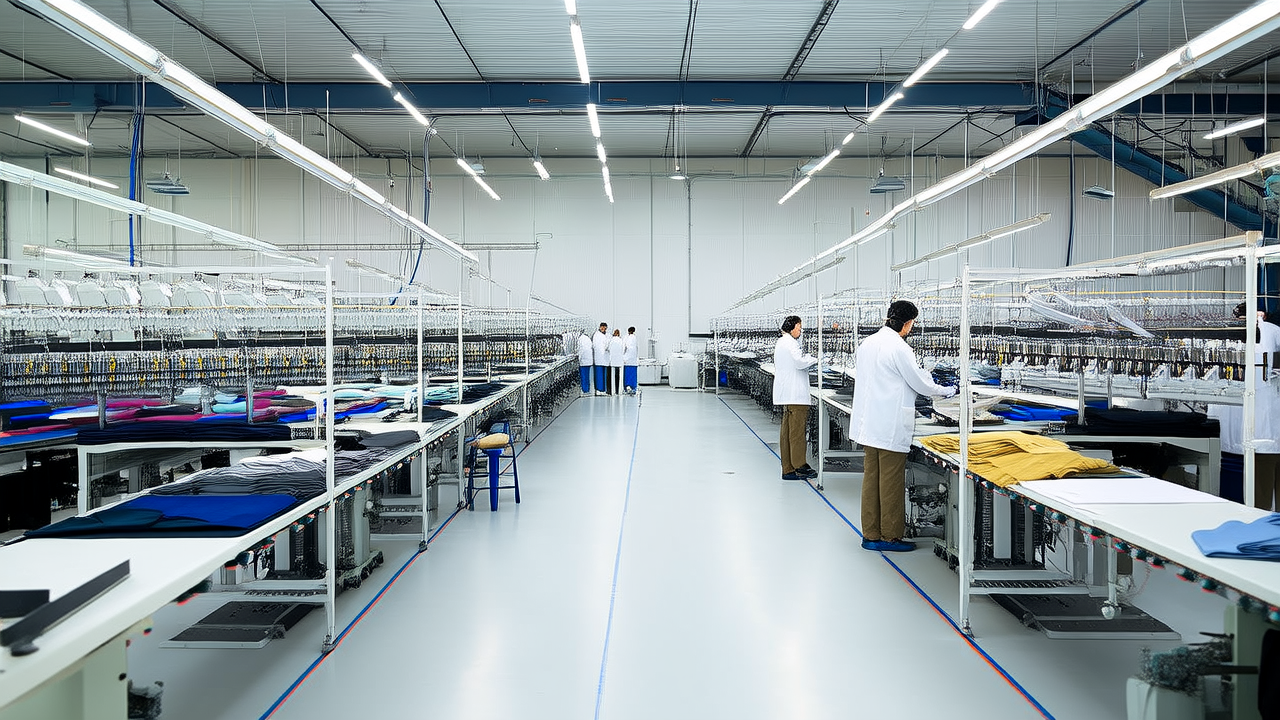
A North African textile-producing nation is attempting to rewrite its role in the global industrial division of labor. The Moroccan Textile and Clothing Technical Center (CTTH) signed a partnership agreement in Casablanca with local B2B service provider Tactical Tactics, targeting the North American high-end garment market. The signal is clear: Morocco is no longer satisfied with basic OEM work for European brands; it aims to embed 'Made in Morocco' into the high-value supply chain of the US and Canadian markets through technical collaboration and standard alignment.
Background
According to industry public data, CTTH, as Morocco's textile technology hub, will provide core services including new product R&D, talent training, quality control, and international certification. Tactical Tactics will integrate these resources to build an export system tailored for the North American market. The core logic is 'technology empowerment + market access'—addressing Morocco's shortcomings in environmental compliance, quality traceability, and regulatory certification to meet US and Canadian market entry requirements.
Post-partnership, Morocco's textile production model faces restructuring. Traditionally, local firms focused on single processes like cutting, sewing, and trim processing, with shrinking profit margins. The new system aims to build a one-stop garment supply chain covering design, raw material selection, precision manufacturing, compliance certification, and cross-border logistics. This means that Moroccan garments entering North American retail shelves will no longer be simple OEM products but 'system outputs' with complete quality control and brand backing.
Concurrently, Tactical Tactics hosted its annual '5/5 Trade Mission' in Casablanca, attracting nearly 100 North American buyers, local manufacturers, and industry representatives. This direct matchmaking platform reduces information asymmetry between Moroccan factories and North American buyers, providing a realistic path for order conversion.
Industry Impact
From an industrial cluster perspective, Casablanca and its surrounding textile hubs are undergoing structural adjustment. In recent years, Moroccan textiles have been squeezed by weak European orders and low-cost Asian competition, with profits declining. Shifting to the North American high-end market is essentially a search for higher premium export destinations. However, the challenge is significant: North American markets have stricter environmental, labor, and traceability standards than Europe, requiring substantial investment in equipment upgrades and certification.
For the upstream supply chain, this means higher raw material procurement standards. High-end garments demand better fabric quality, colorfastness, and eco-friendly dyes, forcing local fiber and fabric suppliers to upgrade or import higher-quality inputs. For downstream buyers, North American brands gain an additional North African sourcing option, but Morocco's capacity and delivery reliability remain to be verified in the short term.
The industry forums also discussed the 'European Digital Product Passport,' signaling Morocco's long-term strategy—using digital tools to create product lifecycle archives. This not only meets European compliance but also provides traceable quality backing for the North American market. Digital transformation and compliance capability building are becoming two pillars for Morocco's shift from low-end OEM to high-value exports.