
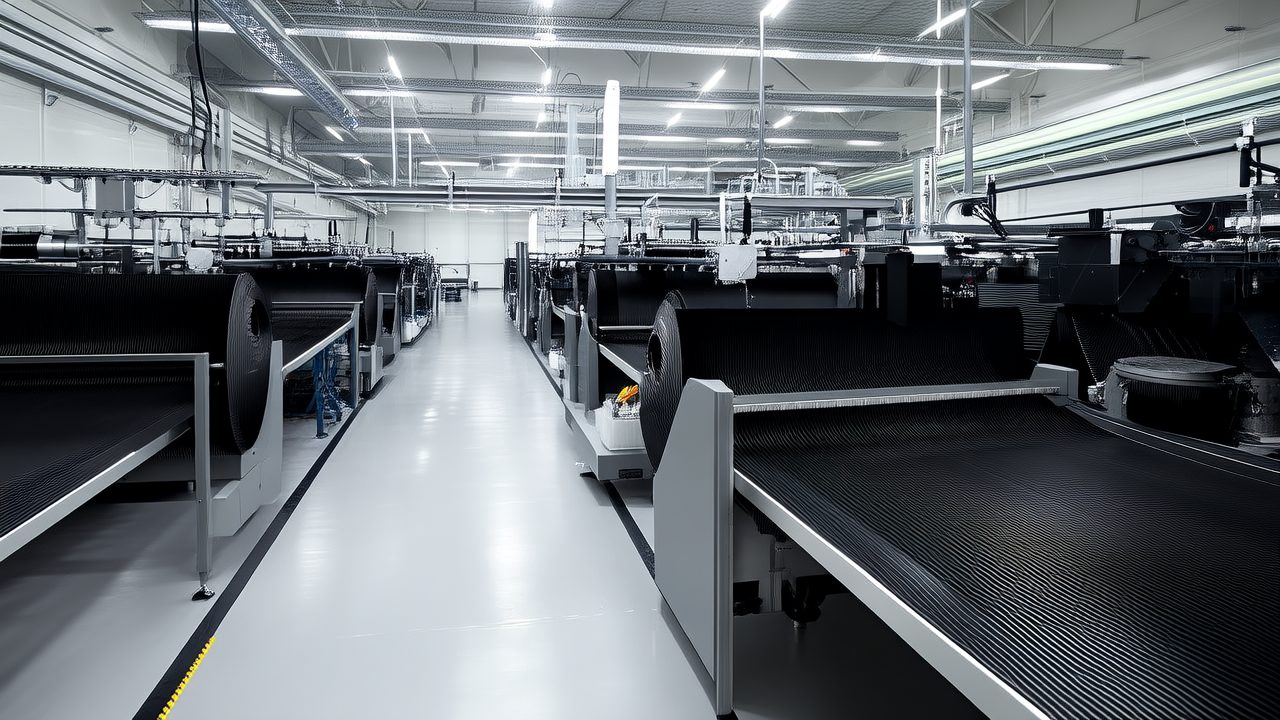
The domestic carbon fiber industry is shifting from single-material breakthroughs to full-chain systemic development. On May 9, 2026, a technical seminar in Shaoxing, Zhejiang, unveiled the creation plan for a national manufacturing innovation center focused on high-performance carbon fiber equipment and composites. This marks the first time a platform covering the entire chain—from precursor, carbonization, equipment manufacturing, to composite applications—has entered substantive implementation.
Full-Chain Breakthrough: From Point to System Integration
Previous innovations in China's carbon fiber sector largely centered on precursor and carbonization processes, while equipment manufacturing and downstream application validation relied on imports or small-scale collaborations. The new center, led by Jinggong Technology in partnership with Tsinghua University, Zhejiang University, Harbin Institute of Technology, and leading industry enterprises, explicitly lists equipment self-reliance as one of six core directions. This means critical equipment like carbonization and pre-oxidation furnaces—long bottlenecks—could see domestic alternatives through concentrated R&D.
The center's academic committee includes prominent figures such as Chinese Academy of Engineering academicians Chen Wenxing and Li Hejun (online), and foreign academician Zhang Jiujun. While 'academician+enterprise+government' structures are common in manufacturing innovation centers, the full-chain positioning is unprecedented in carbon fiber. For buyers, this implies improved performance stability and supply cycles for domestic carbon fiber products as equipment localization advances.
15th Five-Year Plan Kickoff: Timeline for Strategic Material Self-Reliance
2026 marks the start of China's 15th Five-Year Plan, which identifies high-performance carbon fiber and composites as critical materials for strategic emerging industries like aerospace, rail transit, new energy, and embodied intelligence. National Bureau of Statistics data shows China's carbon fiber demand grew ~18% in 2025, but high-end import dependence remains above 30%. This supply-demand gap is exactly what the innovation center aims to address.
Shaoxing's Keqiao district, a traditional textile and chemical fiber hub, is a natural host given its accumulated precision manufacturing capabilities for chemical fiber equipment. Jinggong Technology Chairman Sun Guojun called the center 'a major initiative to tackle key technology bottlenecks in line with the 15th Five-Year Plan.' Behind this statement lies the policy imperative for self-reliance in strategic materials, now translating into concrete platform and funding support.
Technology Roadmap and Industry Impact: Six Directions
According to a report by Jinggong Technology President Li Aijun, the six core directions cover the full process from source innovation to green recycling:
- Optimization of high-performance precursor and carbonization processes
- Localization of carbon fiber equipment (carbonization furnaces, pre-oxidation furnaces)
- Low-cost composite molding technologies
- Recycling and reuse technologies
- Intelligent production line integration
- Expansion of application scenarios (e.g., embodied intelligence, hydrogen storage tanks)
These directions are linked by equipment localization, which connects upstream raw materials and downstream applications. For foreign trade firms, once equipment is localized, the cost competitiveness of carbon fiber products will improve, no longer constrained by imported equipment maintenance and spare parts.