
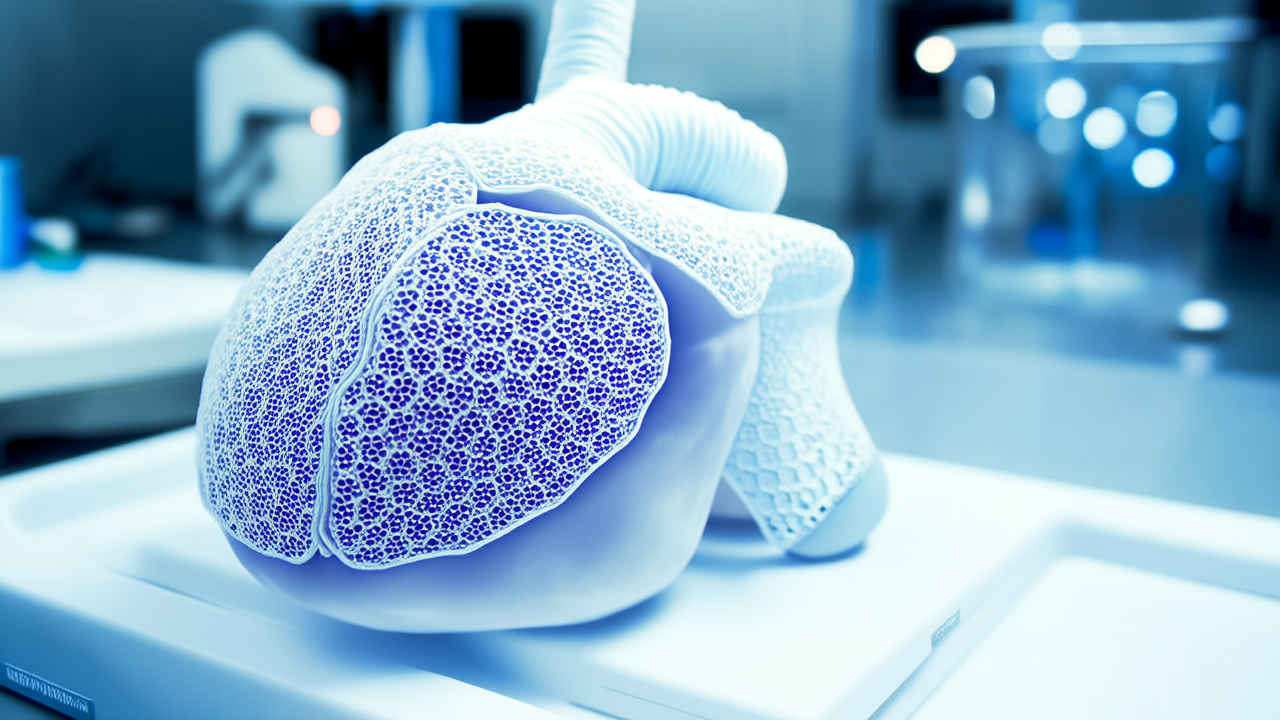
A gossamer-thin conductive fabric is redrawing the boundaries of the textile industry. The sutureless three-dimensional conductive cardiac patch, developed by Professor Mao Jifu's team at Donghua University's College of Textiles, was publicly unveiled at the 2026 China International Textile Fabrics & Accessories (Spring/Summer) Expo. This technology underscores a hard fact: textile engineering can now produce precision medical devices that repair cardiac electrical signals, and the speed of transformation in the traditional textile sector far exceeds market expectations.
Industrial Crossover: From Apparel to Life Support Systems
China sees approximately one million new cases of acute myocardial infarction annually. Post-infarction necrotic myocardium forms non-conductive scar tissue, leading to a 71% heart failure rate within five years. This clinical pain point has become a breakthrough opportunity for textile technology. Mao's team integrated conductive fiber weaving with micro-structure design to create a patch covered with micron-scale conductive "barbs" that anchor to the myocardium with just 60 seconds of gentle pressure, completely avoiding secondary damage from traditional suturing.
The patch's built-in three-dimensional conductive fiber network acts as an electrical signal "bridge." Animal studies show significant improvement in cardiac function within three days of implantation, demonstrating the clinical feasibility of textile-based materials for acute heart attack rescue and chronic heart failure treatment. Technologically, this achievement is not isolated—Donghua University has developed a product matrix including medical sutures, ureteral stents, diabetic wound dressings, and the conductive cardiac patch, all based on textile platforms. Textile engineering is evolving from garment fabric to precision life-support manufacturing.
Market Explosion: Medical Textiles Enter a Golden Growth Period
The global medical textile market is undergoing structural expansion. According to publicly available industry data, the global market exceeded $320 billion in 2025, with China's share surpassing 85 billion yuan and a compound annual growth rate above 10%. Among these, implantable and therapeutic high-end medical textile materials are growing fastest, far outpacing traditional protective products. What does this trend mean for textile enterprises?
For factories long dependent on garment fabric orders, medical textiles offer higher added value and technical barriers. Gross margins for ordinary fabrics typically range from 10% to 15%, while implantable medical textiles can exceed 50%. Moreover, China's textile industry boasts the world's most complete supply chain and large-scale manufacturing capacity, providing a natural advantage for mass-producing medical textiles. Combined with an aging population, rising healthcare spending, and policy support, the window for China to leap from a "textile giant" to a "medical textile powerhouse" is open.
Technical Depth: The Industrial Logic Behind Six Years of R&D
The barriers for medical textile materials are far higher than for ordinary fabrics. Mao's team spent six years breaking through core technologies including conductive polymer fiber spinning, three-dimensional micro-structure weaving, and bio-interface modification. These technologies are not mere lab achievements but directly target industrialization. The patch uses warp-knitting technology to create a honeycomb mesh structure with mechanical anisotropy matching natural myocardium, providing mechanical support without affecting normal contraction and relaxation.
This R&D approach of "one process, multiple applications" offers direct lessons for textile enterprises. A traditional textile factory that establishes a technical advantage in a specific medical niche can quickly expand its product line through process replication. The team has already launched development of a "2.0 version" smart patch that will integrate targeted drug release, creating a multifunctional repair device combining electrical signal restoration, mechanical support, and precision drug delivery. This signals that textile-based medical devices are evolving from "passive support" to "active treatment."