
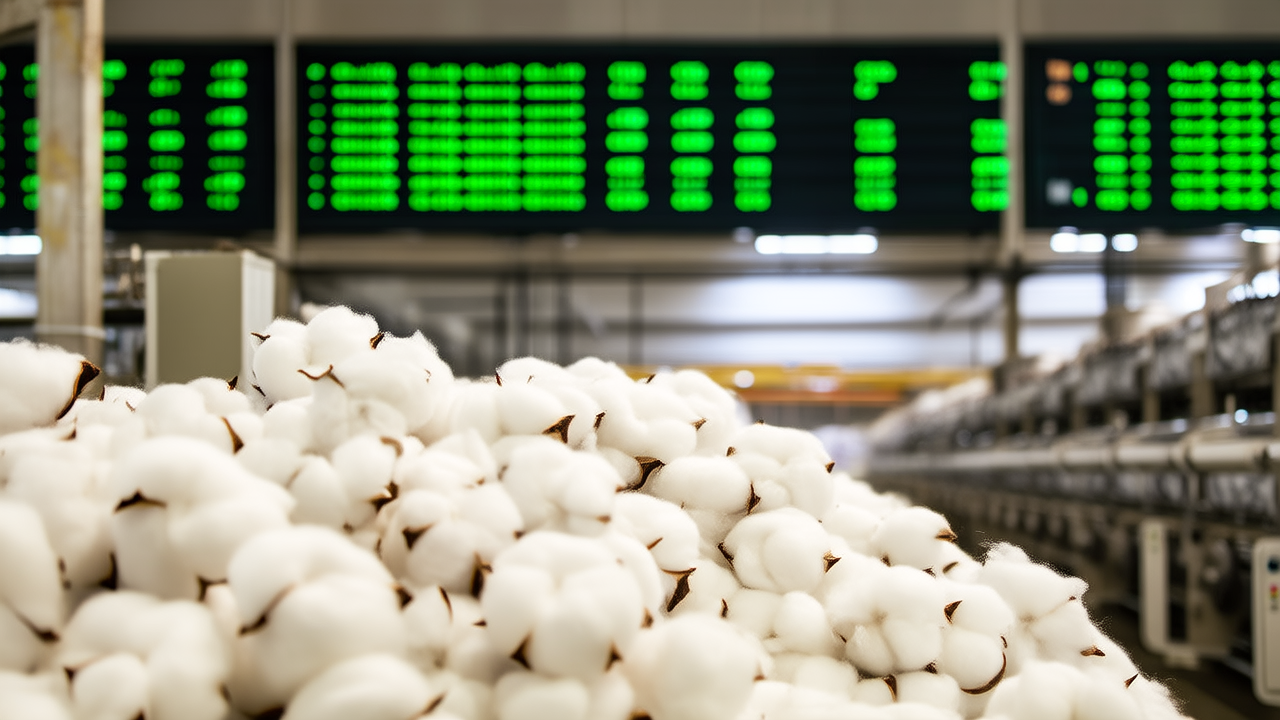
The night trading session on May 12, 2026, delivered a muted signal for the textile raw material market. Cotton yarn futures edged up 0.29% to 22,365 points, cotton rose 0.27% to 16,485 points, and staple fiber gained a mere 0.10% to 8,134 points. PTA posted a slightly higher increase of 0.28%, closing at 6,462 points, while bottle-grade chips bucked the trend with a 0.05% decline to 8,378 points. The overall picture is one of minimal movement and a lack of clear directional momentum.
Night Trading Bounce: Limited Gains in a Stalemate
The modest gains in night trading appear to be driven by short-covering and technical adjustments rather than any fundamental improvement. Cotton at 16,485 points remains in the lower-middle range of its three-month trading band. Cotton yarn, at 22,365 points, is over 3% below its recent peak. The small upticks in staple fiber and PTA suggest that downstream polyester chain buying sentiment has not strengthened significantly. The slight drop in bottle-grade chips hints at ongoing inventory pressure within the polyester sector.
Trading volumes shrank compared to daytime sessions, reflecting cautious participation. Upstream ginners and traders tend to hedge at higher prices, while textile mills maintain a hand-to-mouth procurement strategy, reluctant to build large inventories. This standoff prevents any meaningful price breakout.
Industry Impact: Cost Pass-Through Blocked, Orders Hold the Key
The limited price swings at the raw material level have a constrained impact on midstream and downstream segments. Cotton yarn prices tracked cotton higher but failed to fully cover cost increases, squeezing spinning mill margins. Narrow movements in staple fiber and PTA leave polyester fabric and blended product pricing with little flexibility, forcing weavers to manage through capacity utilization adjustments.
End-use demand remains the critical variable. Domestic apparel consumption is entering a traditional off-season, with brands slowing order placements. On the export front, restocking demand from European and American markets has been sporadic and below expectations. The recovery of Southeast Asian textile capacity is also diverting some Chinese export share. These factors keep downstream weaving and dyeing operating rates around 60%, insufficient to generate strong pull for raw materials.
The decline in bottle-grade chips is a particularly noteworthy signal. As a terminal product in the polyester chain, weakness here often indicates tepid demand from the beverage packaging sector, which could transmit pressure upstream to PTA and PX. If bottle chips remain weak, polyester plants may be forced to cut runs, altering the supply-demand balance for PTA.