
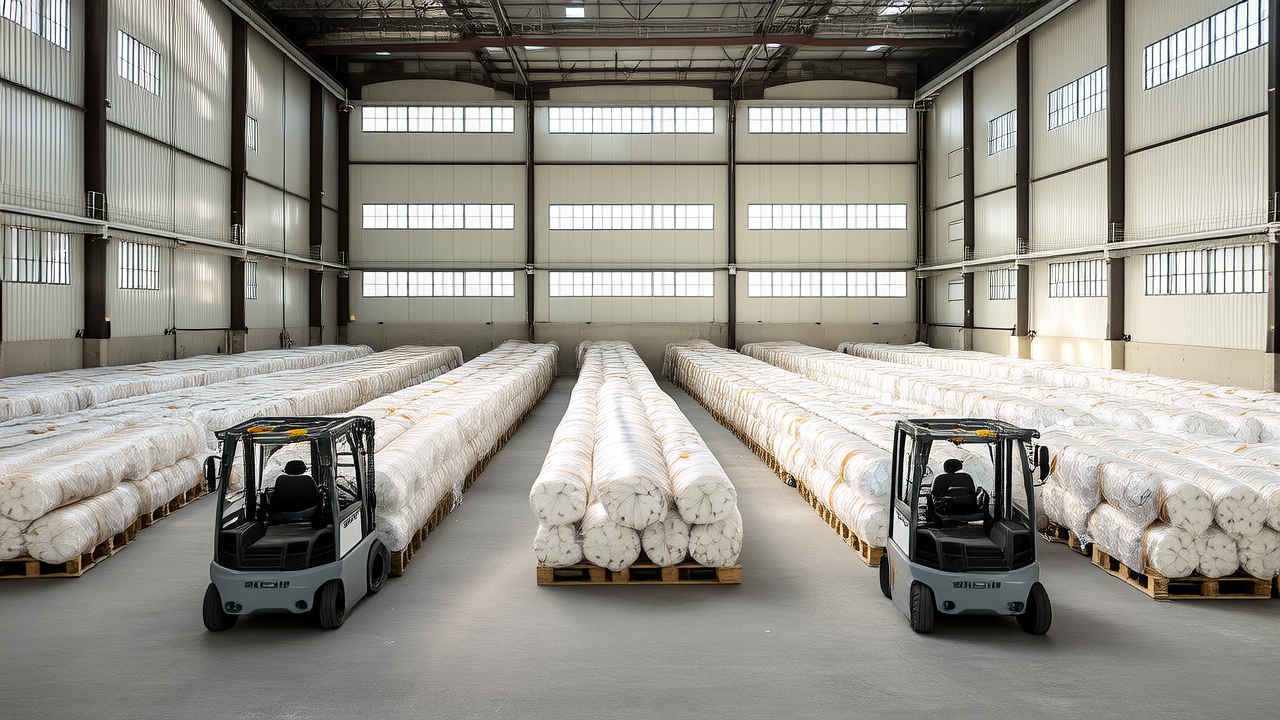
In March 2026, China imported approximately 210,000 tons of cotton yarn, an increase of 80,000 tons month-on-month (61.5%) and a year-on-year surge of 65.7%. The first-quarter total reached 510,000 tons, up nearly 50% year-on-year. For the 2025/26 season (September 2025 to March 2026), cumulative imports hit 1.1 million tons, up 31% year-on-year. These customs data reveal a structural shift in China's cotton textile value chain.
Three Drivers Behind the Import Surge
The primary catalyst is the domestic-international cotton price gap. Since the second half of 2025, China's domestic 3128B grade cotton spot price has consistently exceeded the Cotlook A index equivalent by 2,000-3,000 yuan per ton, making domestic spinning costs significantly higher than in Vietnam, India, and Pakistan. Imported cotton yarn thus enjoys a clear price advantage, spurring traders and weavers to boost purchases.
Second, the relocation of Chinese spinning capacity overseas is accelerating. Many Chinese textile firms have set up mills in Southeast Asia, with products shipped back to China as ‘return yarn.’ These imports reflect capital and technology outflows rather than pure trade substitution.
Third, downstream demand structure is evolving. Knitting clusters in Guangdong and Jiangsu require specific counts and qualities that imported yarns—especially high-count and combed varieties—can reliably supply, filling gaps caused by domestic raw material volatility.
Winners and Losers in the Supply Chain
The import surge directly pressures domestic spinners. Mills in traditional hubs like Shandong and Henan face declining operating rates, with some forced to switch to blended or differentiated yarns. Meanwhile, domestic cotton prices weaken—the Zhengzhou Cotton Futures main contract fell about 4% in Q1 2026 due to import substitution.
Downstream weavers and apparel makers benefit from lower raw material costs. Imported cotton yarn is 5%-8% cheaper than domestic equivalents, improving margins. Factories in Foshan and Shaoxing have increased procurement, with some adding imported yarn to regular inventory.
Globally, China's demand provides stable orders for India, Vietnam, and Uzbekistan. Indian cotton yarn exports to China rose over 80% year-on-year in Q1 2026, while Vietnam's shorter lead times help it capture market share rapidly.