
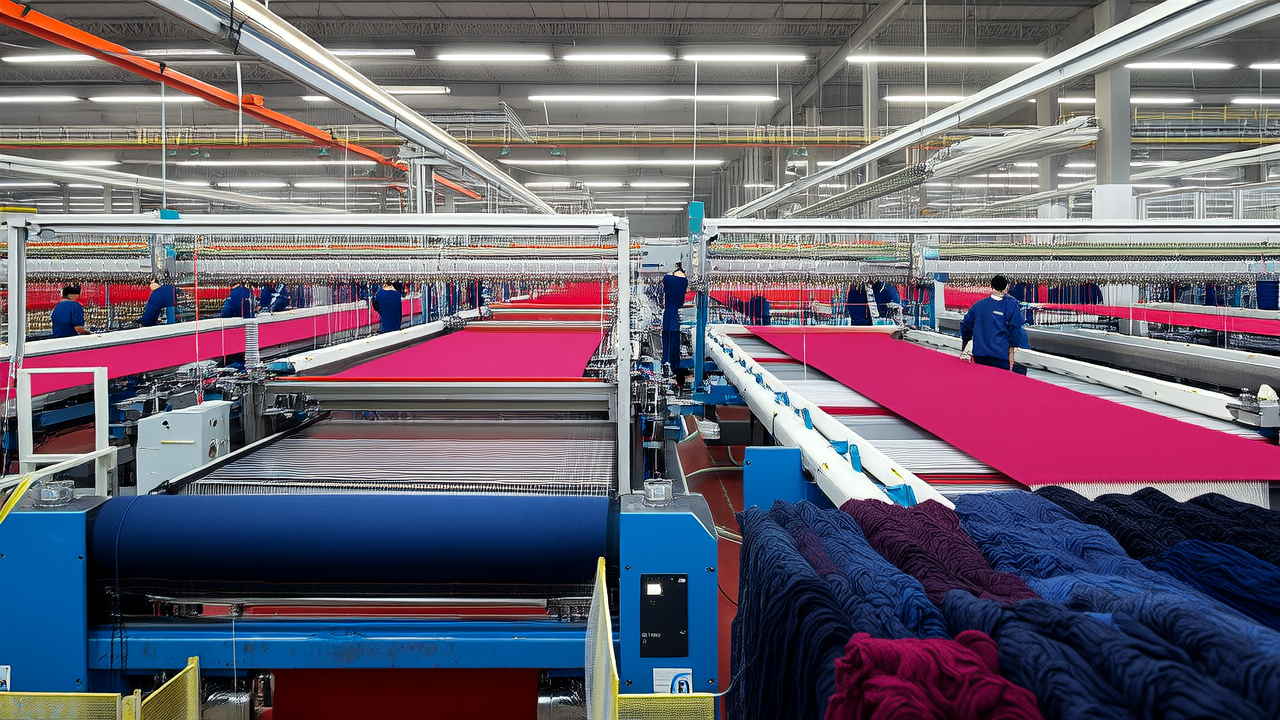
In 2025, Zhejiang Province's textile industry achieved a record 1.12 trillion yuan in revenue and 95.33 billion USD in exports, both ranking first nationally. These figures not only underscore the sector's role as an economic stabilizer but also signal a strategic shift from scale expansion to quality-driven growth. On May 8, 2026, the Zhejiang Textile Industry Association convened a high-quality development conference in Keqiao, Shaoxing, coinciding with the spring textile fair. This alignment reflects a deliberate strategy to merge market dynamics with innovation hubs. Keqiao, the world's largest textile distribution center with an annual turnover exceeding 440 billion yuan, is advancing expansion projects targeting world-class industrial bases, markets, and tech platforms. This triple ambition indicates that Keqiao aims to set standards and define trends, not just trade volumes.
Across the province, specialized clusters like Lanxi (denim), Changxing (chemical fibers), Tongxiang (knitwear), and Cangnan (woven goods) have proven resilient. Government data shows the industry navigated external pressures in 2025, thanks to differentiated specialization that buffers against single-category volatility. For buyers, this means enhanced supply chain stability with multiple clusters supporting each other.
Digital transformation and green manufacturing emerged as key themes. Companies like Shaoxing Huansi Smart Technology showcased end-to-end digital solutions from spinning to dyeing. The driver is not novelty but necessity: labor costs have risen 30% in five years, while order fragmentation demands agility. Smart factories report 15-20% efficiency gains and defect rates below 2%. For exporters, this translates into controllable lead times and consistent quality—essential for maintaining premium orders from demanding Western buyers. Green manufacturing is moving from optional to mandatory. With the EU's CBAM trial underway and 35% of Zhejiang's textile exports destined for Europe, carbon footprint management is a prerequisite for high-end supply chains. Industry data indicates that green-process investments, though 8-12% higher upfront, are recouped within three years through energy savings and price premiums.
Insights from industry leaders like Sun Weiting, chairman of Huafu Fashion, offer a sobering perspective: "Profit in the first half, minimize losses in the second, and guard cash flow." This reflects the reality of a zero-sum market where scale-driven survival no longer works. He advises prioritizing Western markets over domestic expansion—a view supported by customs data showing rising high-value exports to Europe and the US, while low-end orders shift to Southeast Asia. Buyers should evaluate suppliers on digital capabilities and environmental certifications, not just price.
The Zhejiang Textile Engineering Society and the association signed agreements to co-build six professional committees covering fibers, spinning, weaving, home textiles, machinery, and sustainability. This "society + association" model bridges academic research and industrial needs, turning lab innovations into commercial solutions—for example, customized functional masterbatches and smart looms. For buyers, this means access to cutting-edge materials and processes.
Practical Advice
#### For Buyers
- Prioritize suppliers with digital management systems (e.g., MES, ERP), and test reliability with small trial orders.
- Request carbon footprint reports or certifications (OEKO-TEX, GOTS) as these will become mandatory for European markets within three years.
- Leverage Zhejiang's cluster specialization: denim from Lanxi, chemical fibers from Changxing, knitwear from Tongxiang—use cluster efficiency to reduce costs.
#### For Exporters
- Partner with smart factories to meet Western buyers' demands for speed and compliance.
- Monitor trend releases at Keqiao Textile Expo to forecast fabric directions half a year ahead.
- Position Zhejiang factories as hubs for high-value, fast-turnaround orders, while shifting low-end production to Southeast Asia.