
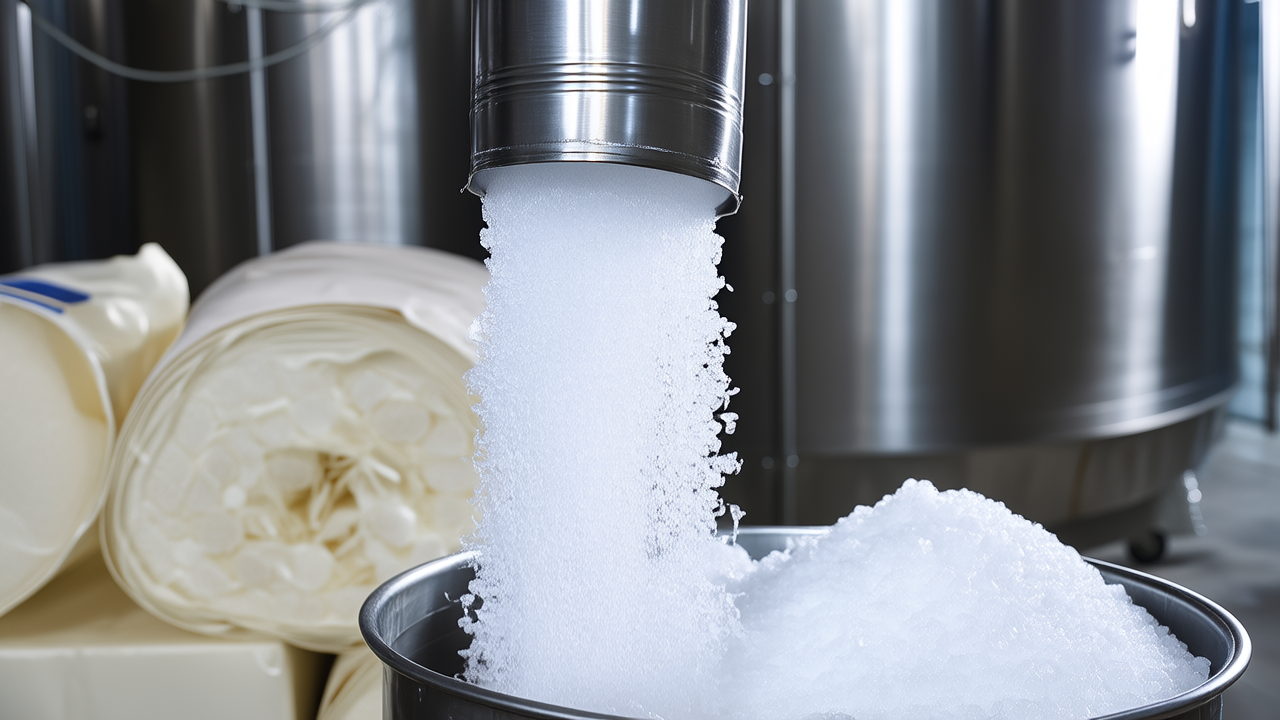
The European Union has finalized anti-dumping duties on Chinese adipic acid, with rates ranging from 29.1% to 42.3%, effective from May 5, 2026. This move effectively neutralizes the price advantage of Chinese exporters in the EU market, especially at the highest rate, which could wipe out profit margins entirely.
Data Reveals Deep Market Dependence
The EU imports approximately €160 million worth of adipic acid annually, with €130 million—or 80%—coming from China. This ratio reflects not just a trade relationship but a deep supply chain dependency. The EU claims that Chinese products are sold below normal value, causing material injury to domestic producers in Germany, France, and Italy, affecting over 1,100 jobs. Industry data shows China holds about 65% of global adipic acid capacity, making it the largest producer with unmatched cost control and supply stability.
Direct Impact on Textile Chemical Chains
Adipic acid is a key raw material for nylon 66, polyurethane, coatings, and plasticizers. In textiles, nylon 66 is widely used in high-end fabrics, sportswear, and industrial textiles, while polyurethane is essential for synthetic leather and elastic fibers. The EU duties will directly raise raw material costs for local textile, automotive, furniture, and construction sectors. Downstream EU factories face either higher procurement costs or a shift to alternative sources in Southeast Asia or the Middle East—none of which currently match China's capacity and quality consistency.
Industry Divergence and Trade Flow Shifts
The final ruling is not uniform: companies that cooperated with the investigation face lower rates, while non-cooperative firms face the maximum 42.3%. This creates clear divergence within the industry. Cooperative exporters may retain some EU market share, while passive ones effectively lose access to the €130 million market. Meanwhile, global trade flows are reshuffling: EU buyers seek alternative sources, and Chinese exporters accelerate expansion into Belt and Road countries, Southeast Asia, and the Middle East. This adjustment will take two to three years but will fundamentally alter the trade landscape.
Long-Term Logic of Industrial Upgrade
In the short term, the duties are a negative for China's adipic acid industry, with order volumes and profits under pressure. However, from an industry analysis perspective, this is an opportunity to shift from scale-driven growth to quality-driven development. Over the past years, China's dominance relied on cost advantages and scale, but price competition has always invited trade friction. This event will push companies to regulate export practices, avoid vicious pricing, and invest in R&D for higher-value, differentiated products. For buyers, future Chinese adipic acid supply will emphasize compliance and quality over pure low prices.