
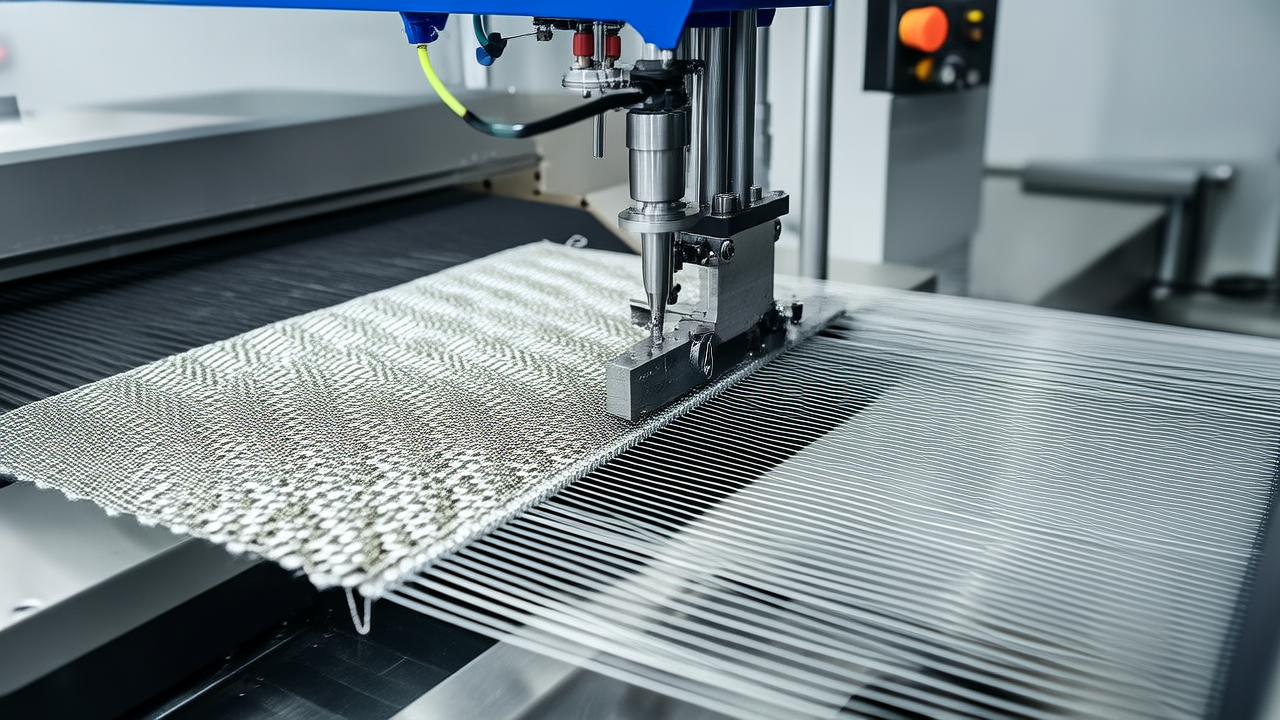
A piece of fabric, thinner than a cicada's wing, can be pressed onto the surface of a heart for 60 seconds, anchor itself without sutures, and restore electrical signal conduction in damaged myocardium. This is not science fiction but a real achievement displayed by Professor Mao Jifu's team at Donghua University during the 2026 China International Textile Fabrics & Accessories (Spring/Summer) Expo: a suture-free three-dimensional conductive cardiac patch.
The patch is manufactured using warp-knitting technology to create a honeycomb mesh structure that closely matches the mechanical anisotropy of natural heart muscle. Its surface is covered with micron-scale conductive 'barbs' that eliminate the need for traditional needle-and-thread suturing. Animal experiments show significant improvement in cardiac function within three days of implantation. The breakthrough lies in redefining textile processing as a method for fabricating precision life-support devices.
Restructuring the Industry Logic
Traditional textiles are often viewed as a labor-intensive, low-value-added OEM industry. The conductive cardiac patch overturns this perception. Professor Mao's team spent six years overcoming core technical barriers including conductive polymer fiber spinning, three-dimensional microstructure weaving, and bio-interface modification. This demonstrates that textile technology platforms are now capable of manufacturing implantable medical devices.
From an investment perspective, this is not an isolated case. The global medical textile market is booming: in 2025 it exceeded $320 billion, with China's market surpassing 85 billion yuan, growing at a compound annual growth rate of over 10%. Among segments, implantable and therapeutic high-end medical textiles are growing fastest, far outpacing traditional protective products. China's textile industry possesses the world's most complete supply chain and large-scale manufacturing capacity. Combined with an aging population, rising healthcare spending, and policy support, the window to transform from a 'textile giant' into a 'medical textile powerhouse' is wide open.
Implications for Supply Chains and Procurement
What does this technology path mean for traditional fabric buyers and factories? First, product definition changes fundamentally. Buyers must now evaluate parameters such as biocompatibility, electrical conductivity, and mechanical anisotropy, rather than just weight, colorfastness, and hand feel. Supply chain entry barriers rise significantly.
Second, manufacturing precision requires equipment upgrades. The use of warp-knitting technology in medical patches demands looms with micron-level precision control and clean-room production environments. For factories aiming to enter the medical textile sector, existing general-purpose equipment may not meet Good Manufacturing Practice (GMP) standards.
Third, certification cycles are long but profit margins are high. Unlike apparel fabrics, medical textiles require registration with the National Medical Products Administration (NMPA) or the U.S. Food and Drug Administration (FDA), a process that typically takes 2 to 5 years. However, once approved, gross margins can reach 60% to 80%, compared to 10% to 20% for conventional fabrics.
Technology Evolution and Market Expectations
Professor Mao's team has already developed a product matrix including medical sutures, ureteral stents, diabetic wound dressings, and the conductive cardiac patch—all based on textile technology platforms. They have initiated development of a '2.0 version' smart patch integrating targeted drug release, aiming to create an 'all-in-one cardiac repair master' that combines electrical signal restoration, mechanical support, and precision drug delivery.
This trend aligns with global medical device directions: integration of smart sensors, drug delivery, and tissue engineering with textile substrates is accelerating. For domestic textile companies, medical textiles represent not only a new incremental market but also a strategic path to escape low-end competition and build technological moats.
Practical Recommendations
For Buyers - Reassess supplier technical capabilities: Prioritize factories with biomedical material R&D backgrounds or partnerships with universities, rather than making decisions solely based on price and delivery. - Plan certification resources early: The procurement cycle for medical textiles is much longer than for conventional fabrics; allow 12 to 18 months for selection, testing, and registration. - Focus on niche segments: Beyond cardiac patches, categories such as artificial blood vessels, hernia meshes, and absorbable sutures offer domestic substitution opportunities; buyers can start with more mature technologies.
For Factories - Invest in clean rooms and precision looms: Medical textiles demand high-cleanliness production environments (e.g., class 10,000 or 100,000) and precise weaving; evaluate ROI for equipment retrofitting. - Build cross-disciplinary teams: Medical textiles require knowledge integration across textile engineering, materials science, and medicine; recruit personnel with biomedical or medical device backgrounds. - Proactively engage clinical needs: Collaborate with hospitals or university labs on animal experiments and preclinical studies to shorten the path from lab to market.
The boundaries of the textile industry are being redrawn. The conductive cardiac patch is just the beginning. When warp-knitting machines weave implantable life-support scaffolds, the valuation logic of the entire industry will be rewritten.