
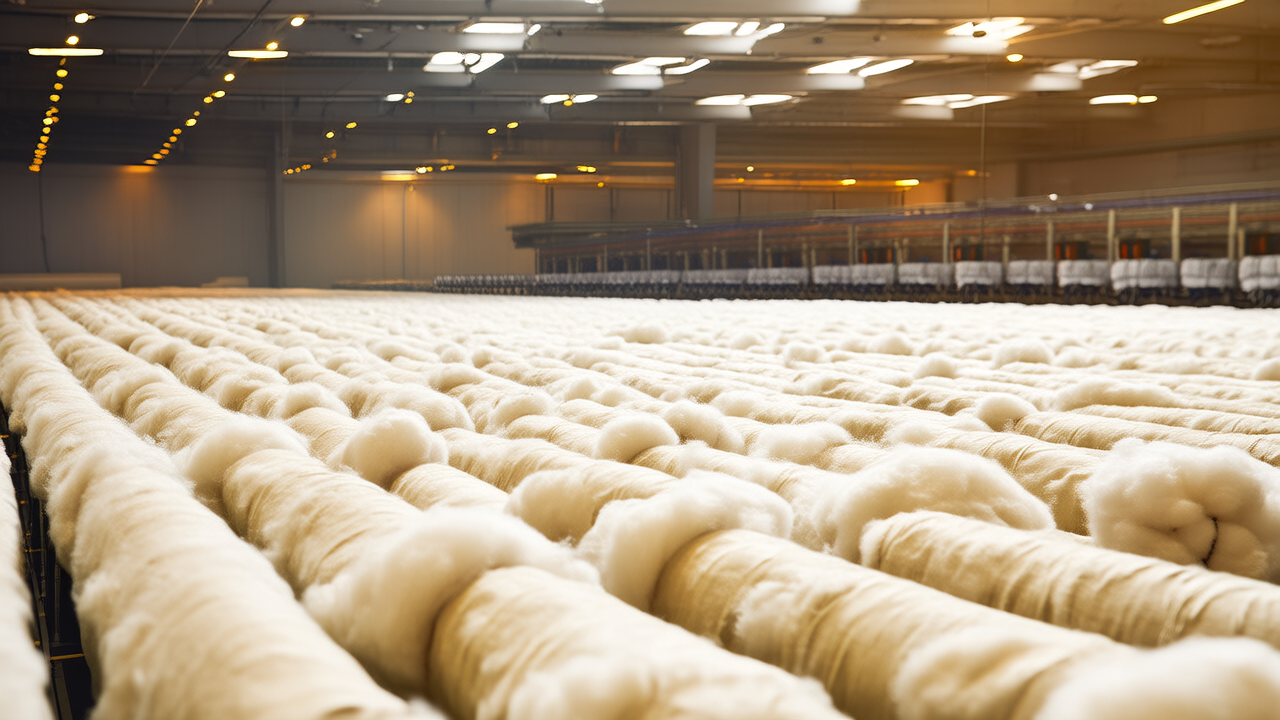
After the May Day holiday, Zhengzhou cotton futures experienced a sharp rally followed by a steep decline. The main contract briefly tested the key resistance level of 17,000 yuan per ton before retreating, accumulating a drop of over 600 points from its peak as of May 11. Long positions have been significantly reduced, signaling a shift in market sentiment from optimism to caution. A short-term bearish consolidation pattern is now firmly in place.
Spot and Futures Divergence: Low Inventories Fail to Halt Price Declines
Current commercial cotton inventories in China are at seasonal lows, with high-quality Xinjiang cotton (double 29 grade, impurity below 3%) particularly scarce. Basis levels remain firm at 1,200 yuan per ton, giving spot holders strong bargaining power. However, spot prices are still following the futures market downward, creating a paradoxical scenario of low inventories, falling prices, and weak trading volumes.
Downstream textile mills are adhering to a 'buy-as-needed' strategy, maintaining only routine replenishment and showing little appetite for large-scale stockpiling. This indicates that weak end-demand is overriding the support from tight inventories, leaving the market without a catalyst for price recovery. The negative feedback loop—futures decline leads to spot declines, which in turn reinforces buyer caution—continues to suppress any rebound potential.
Terminal Demand Shows Structural Divergence: Premium Yarns Hold Ground, Commodity Grades Suffer
Entering May, the textile sector has officially exited the traditional peak season of 'Golden March and Silver April' and entered a seasonal slack period. Current orders display clear structural divergence: high-end 40S compact and combed cotton yarns maintain robust demand, with order backlogs extending through July and August. Mills are primarily executing existing orders, keeping operations relatively stable.
In contrast, orders for regular-count cotton yarns are weakening, with inventories gradually building and prices under pressure. Manufacturers have cut quotes by 100-200 yuan per ton for standard yarns, while high-end products hold steady due to stable order support. This divergence means profitability will vary significantly across the supply chain—mills focused on premium products can sustain margins, while those relying on commodity grades face increasing headwinds.
Gray Fabric Market Accelerates Decline: Operating Rates Drop to 40%
The gray fabric market is experiencing an even sharper downturn. Weakening final product demand has transmitted to the weaving sector, with operating loads continuing to fall. In key weaving hubs like Foshan, circular knitting machine utilization has dropped to 40%, a significant decline from peak season levels. New orders are scarce, old orders are winding down, and the industry faces a pronounced gap in order flow.
Terminal demand from apparel and home textiles remains sluggish, increasing destocking pressure on downstream mills. This negative feedback loop—falling futures, declining spot prices, cautious buyers, and further demand contraction—severely limits the upside potential for cotton prices in the near term. Without a tangible improvement in end-user demand, even tight upstream inventories cannot generate effective price momentum.
Multiple Uncertainties Converge: Reserve Release Expectations and Macro Headwinds
Beyond weak fundamentals, the market is grappling with multiple uncertainties. The upcoming visit of U.S. President Donald Trump to China could roil commodity market sentiment, with the cotton sector likely to experience volatility tied to broader macro sentiment. Meanwhile, persistent rumors of state reserve cotton releases are weighing on prices.
In a slack season with weak demand, the expectation of reserve releases exacerbates concerns about supply loosening. Combined with elevated valuations following the earlier price surge, risk aversion has intensified, prompting long-position liquidation and accelerating the short-term correction. Historically, reserve release expectations tend to suppress prices during slack seasons, but the actual impact depends on the volume and pace of releases. A limited release could even serve as a 'sell the rumor, buy the fact' catalyst.
Mid- to Long-Term Support Remains Intact: Supply Gap and Acreage Reduction
Despite short-term headwinds, the mid- to long-term support case remains solid. Domestic commercial cotton inventories are at low levels, and the annual reduction in Xinjiang's cotton planting area is a done deal. Industry estimates point to a 3%-5% decline in the new crop's output. China's annual cotton supply-demand gap persists, with limited import supplementation, leaving the overall tight balance unchanged.
This suggests that the current price correction is driven by seasonal demand weakness and sentiment shifts, not a fundamental reversal. As the traditional peak season approaches in the second half of the year, terminal demand is expected to gradually recover, providing room for a valuation rebound after the correction. Industry analysis places the near-term trading range for Zhengzhou cotton futures at 16,000-16,800 yuan per ton. After bottoming out within this range, a return to the upward trend remains likely.