
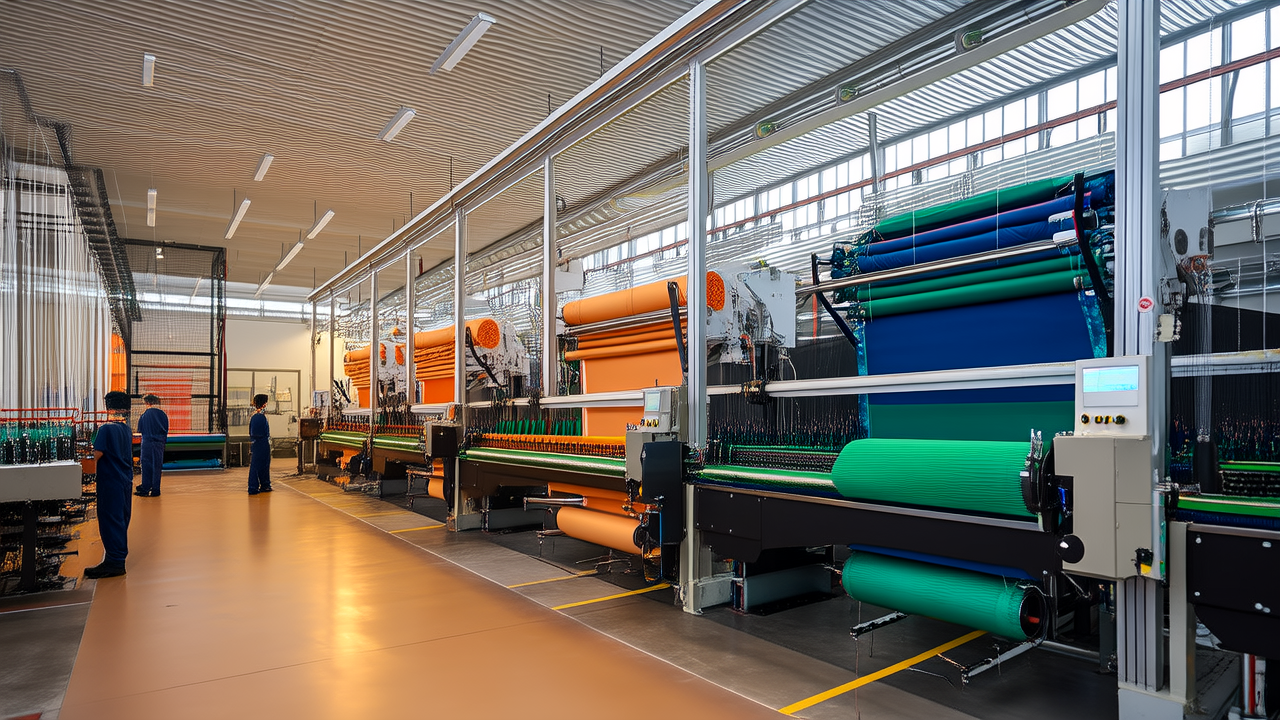
When industrial internet matures from concept to concrete cases, the textile industry's digital transformation is undergoing a qualitative leap. China's Ministry of Industry and Information Technology recently announced exemplary cases for 2025 industrial internet 'chain-network synergy,' with four textile and apparel projects selected, covering technologies from AI to 5G. This concentrated release signals a shift from pilot projects to systematic deployment.
Background
The four selected projects are: AI vertical large model application across the textile supply chain, 5G-based smart manufacturing chain-network solution, industrial internet-enabled full-chain digital collaboration system, and intelligent garment service solution. Public information shows these cases focus on specific scenarios including production unit simulation, equipment collaboration, flexible manufacturing, process compliance, demand forecasting, inventory optimization, quality traceability, 3D virtual fitting, and enterprise cooperation.
Notably, the ministry's call explicitly targets two categories: 'technology-leading' and 'application-popularizing.' The former emphasizes innovation and system integration, while the latter focuses on economic benefits and large-scale deployment. The inclusion of four textile cases indicates recognition in both dimensions.
Industry Impact
From an industrial cluster perspective, these cases will reshape competition in areas like Keqiao, Shengze, and Nantong. The AI large model, for example, breaks data silos from raw material procurement to finished goods, enabling real-time production scheduling and inventory adjustments. For fabric buyers, this means shorter lead times and lower price volatility.
5G-driven smart manufacturing directly benefits factories. In equipment collaboration and flexible production scenarios, line changeover times can shrink from hours to minutes. This suits the fast-fashion and cross-border e-commerce demand for rapid response.
Full-chain digital collaboration addresses long-standing information asymmetry in textiles. Traditionally, communication between fabric mills, garment factories, and brands relies on emails and calls, with order changes causing days of delays. With platform-based collaboration, data is shared in real time, process compliance and inventory optimization happen automatically, reducing errors and costs.
SMEs face the most direct impact. Industry data shows less than 30% of textile SMEs are cloud-connected. The 'chain-network' model aims to drive adoption through benchmark cases. Once scaled, overall industry efficiency could improve 15%-20%, with lower energy consumption and defect rates.
Practical Advice
For Buyers - Prioritize fabric suppliers already connected to industrial internet platforms, as they typically offer more stable delivery and transparent pricing. - Use 3D virtual fitting and demand forecasting tools to test virtually during sampling, reducing physical samples and inventory. - Include digital collaboration clauses in contracts, requiring suppliers to open production progress and quality inspection data interfaces for real-time traceability.
For Foreign Trade Companies - Add 5G capability and full-chain collaboration level as new supplier evaluation criteria, directly impacting order responsiveness and compliance. - For European and American clients demanding supply chain transparency, prioritize factories with quality traceability and process optimization capabilities to boost bargaining power. - Monitor follow-up 'chain-network' promotion policies from the ministry; SMEs may qualify for cloud subsidies or technical support, so prepare systems and talent early.
Moving forward, these four cases will serve as a starting point to accelerate digital integration in textiles. From point-based to full-chain intelligence, from large enterprises to SME adoption, industrial internet is redefining the competitive edge of the textile industry.