
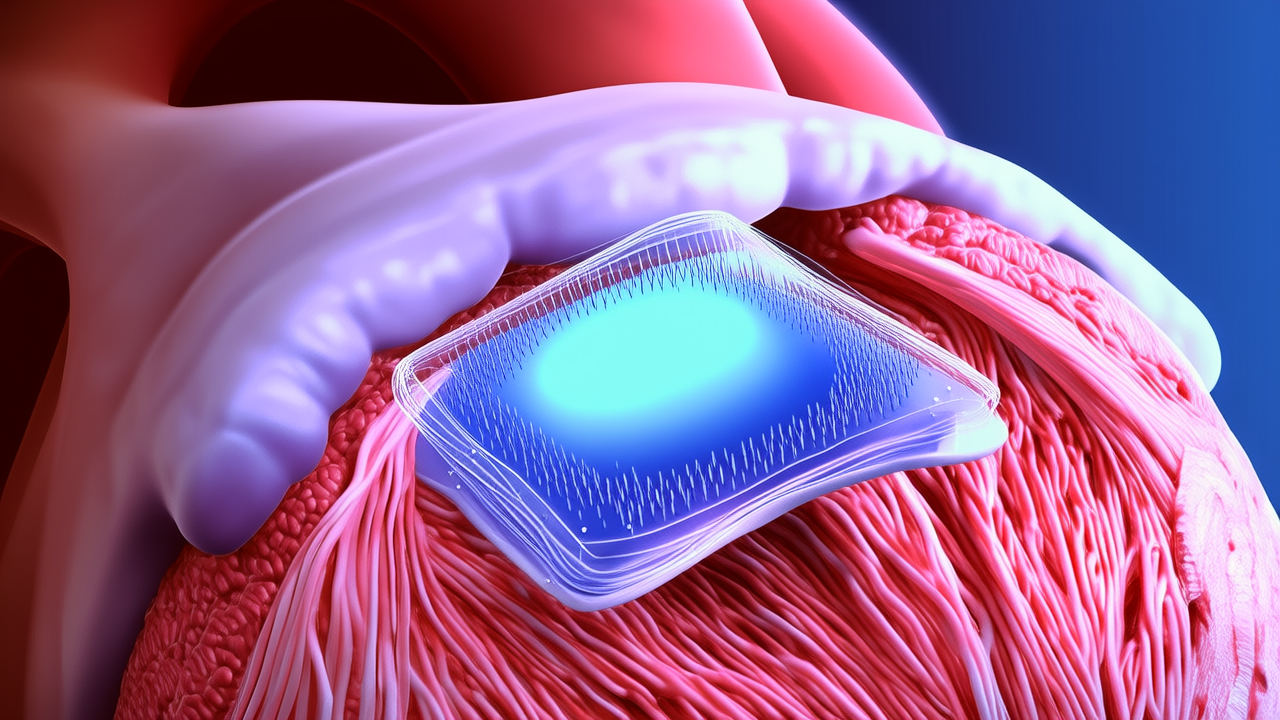
A piece of 'fabric' that can repair a heart's electrical circuit—this is not science fiction but a real achievement presented by Donghua University's team at the 2026 China International Trade Fair for Apparel Fabrics and Accessories (Spring/Summer). This suture-free three-dimensional conductive cardiac patch pushes traditional textile technology into the realm of life medicine and charts a new growth curve for the entire textile industry.
Background
China reports approximately 1 million new cases of acute myocardial infarction annually. Post-infarction necrotic myocardium forms scar tissue that blocks cardiac electrical signal conduction, leading to a 71% incidence of heart failure within five years. Repairing the heart's 'circuit' has long been a core challenge for global medicine. The Donghua team, leveraging conductive fiber weaving and micro-structure design, created a patch with micron-scale conductive 'barbs' on its surface. Doctors need only press it on the heart surface for 60 seconds; the barbs penetrate the epicardium and scar tissue, eliminating the need for sutures and avoiding secondary damage from traditional stitching.
The patch's internal three-dimensional conductive fiber network builds a 'bridge' for interrupted electrical signals. Animal trials confirm significant improvement in cardiac function within three days of implantation. This technological path essentially combines warp knitting with a honeycomb mesh structure, achieving mechanical anisotropy that closely matches natural myocardium—providing mechanical support without interfering with normal contraction and relaxation.
Industrial Implications
The debut of the conductive cardiac patch signals more than a single research achievement; it marks a systematic penetration of textile technology into high-end medical applications. Donghua's team has developed a product matrix of four core items—medical sutures, ureteral stents, diabetic wound dressings, and the conductive cardiac patch—all based on a textile technology platform. This means traditional 'weaving' capability is being redefined as 'precision life-support manufacturing.'
From a market perspective, the global medical textile market exceeded $320 billion in 2025, with China's market surpassing 85 billion yuan and a CAGR above 10%. Implantable, therapeutic high-end medical textile materials are growing fastest, far outpacing traditional protective products. China's textile industry, with the world's most complete supply chain and large-scale manufacturing capacity, is accelerating its transition from a 'big textile country' to a 'strong medical textile country,' driven by an aging population, rising healthcare spending, and policy support.
For buyers and factories, the signal is clear: the added value of medical textiles far exceeds that of conventional apparel fabrics. The technical barriers and pricing power of a conductive cardiac patch are incomparable to a roll of ordinary polyester. The industry must redefine the boundaries of 'textile'—it is no longer just a clothing material but a high-tech carrier capable of entering the human body and repairing organs.