
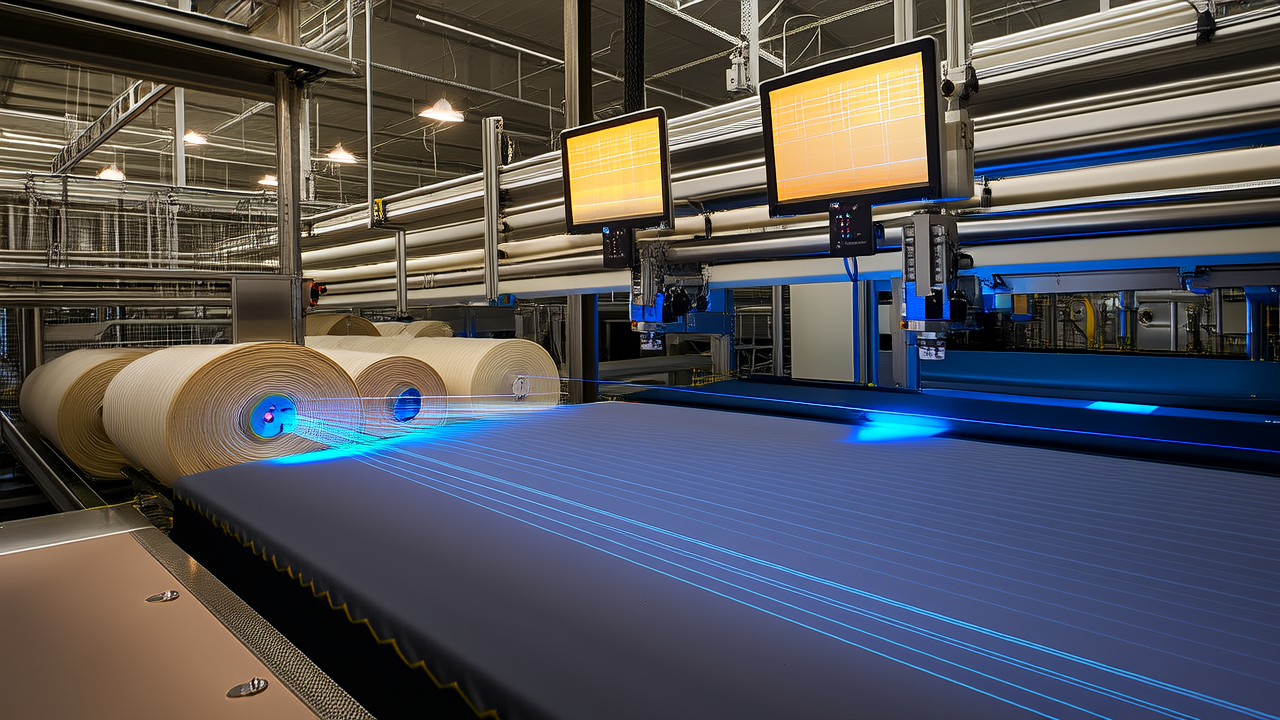
The digital transformation of the dyeing and printing segment is shifting from an option to a necessity. At the recently concluded 2026 Textile Industry Digitalization Development Conference, a key signal was repeatedly emphasized: AI applications in textiles have moved beyond the concept validation stage and are accelerating toward large-scale deployment.
Event Background
Held on May 7 in Keqiao, Shaoxing, the conference was themed 'Smart Link Textile Capital, Digital Create Future.' As one of the world's largest textile distribution centers, Keqiao's industrial trends often serve as a bellwether. The event identified three core tracks: intelligent transformation of dyeing enterprises, AI-based fabric inspection, and enterprise-wide process digitalization. This reflects the industry's urgent need to shift from 'point breakthroughs' to 'system integration.'
Yan Yan, Vice President of the China National Textile and Apparel Council, outlined three clear directions: promoting deep AI deployment and building a complementary ecosystem of large and small textile-specific models; deepening cross-chain data collaboration to break down inter-segment barriers; and deeply integrating green manufacturing with digitalization to establish a traceable carbon footprint model. This effectively maps out the digital roadmap for the industry during the '15th Five-Year Plan' period.
Industry Impact
Data provides the most direct evidence. The TDSD low-carbon digital dyeing technology showcased by Hangzhou Huanyu Digital Smart Technology achieves nearly 99% water savings, 33% carbon reduction, and 21% less chemical use. Such metrics mean that environmental compliance barriers for dyeing and finishing enterprises are being significantly lowered through technological means. The technology combines inkjet equipment, new material inks, and an AI color management system to enable a flexible 'print-and-dye' production model.
Another noteworthy case comes from Meixinda Printing and Dyeing. General Manager Long Fangsheng summarized the evolution of its digital factory into three stages: 'shaping the body, forging the soul, and awakening wisdom.' He proposed a disruptive view: smart factories should not be seen as cost centers but as order-creation centers. This judgment offers direct strategic insight for dyeing enterprises long struggling with thin margins.
Progress in AI fabric inspection is also significant. Traditional manual inspection faces pain points such as recruitment difficulties, high miss rates, and delayed feedback. AI vision solutions from companies like Shanghai Kaiqiang Intelligent Technology and Nantong Julian Digital Technology now enable multi-scenario coverage including online defect warning and warp/weft density monitoring. However, Luo Yucheng, Deputy General Manager of Shaoxing Keqiao Weaving and Dyeing Industry Brain Operations Co., Ltd., candidly identified current bottlenecks: algorithm adaptation for complex fabrics, system stability, and high deployment costs for SMEs remain major obstacles.
How should SMEs approach digitalization? Hu Song, Director of the China Textile Information Center, proposed a five-step method: 'diagnose current status, select scenarios, supplement data, run pilots, and expand capabilities.' He emphasized starting from the most painful, data-clear, and measurable-benefit links, using 'small-cut applications' to drive 'large-ecosystem transformation.' Shaoxing Getakesi Light Textile Technology offers a lightweight, iterative digital path for small and medium trading companies via a low-code platform.