
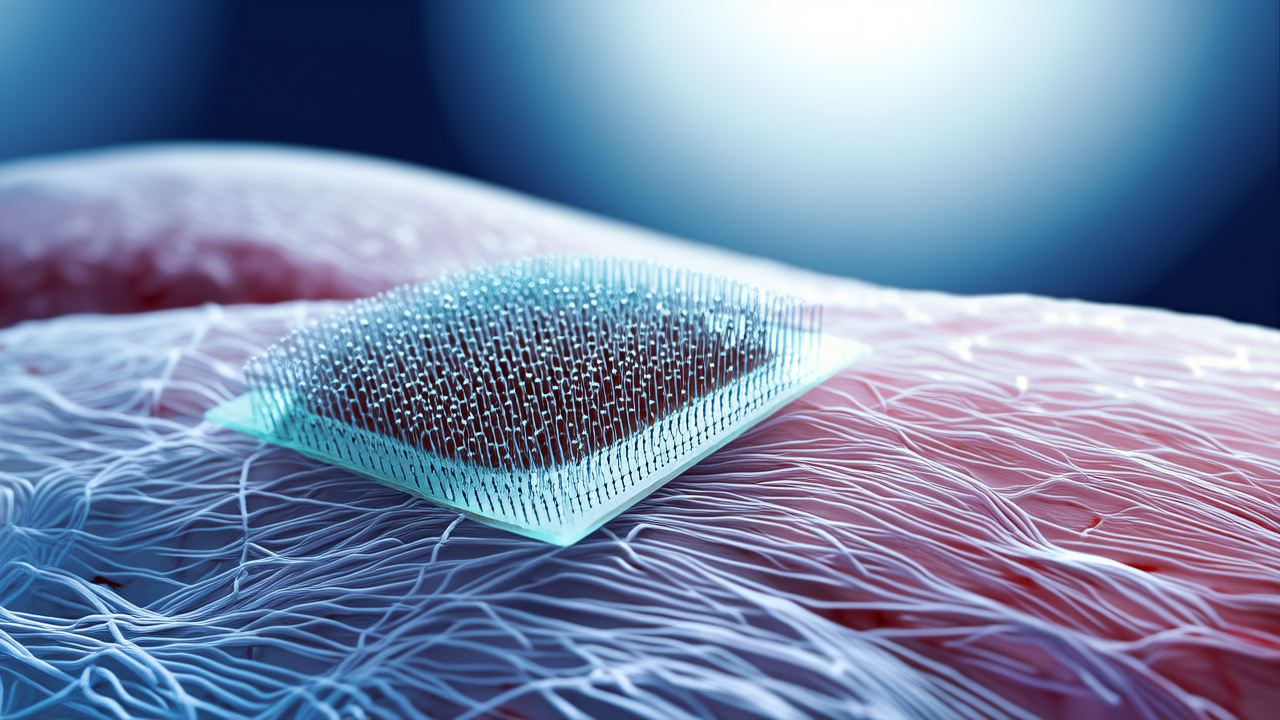
A fabric as thin as a cicada's wing is rewriting the narrative of both heart attack treatment and the textile industry.
At the 2026 China International Textile Fabrics & Accessories (Spring/Summer) Expo, Donghua University's Mao Jifu team unveiled a suture-free 3D conductive cardiac patch that pushes the boundary of textile craftsmanship from garment cutting to heart repair. The patch uses conductive fiber weaving and micro-structure design, with micron-level conductive barbs on its surface. A surgeon can anchor it by pressing gently on the heart for 60 seconds, eliminating the need for traditional sutures. Animal experiments show significant improvement in cardiac function within three days of implantation.
Background
Cardiovascular disease remains the world's leading health threat. China reports about 1 million new acute myocardial infarction cases annually. After infarction, necrotic heart muscle forms scar tissue that lacks conductive function, causing electrical signal blockages and a 71% five-year heart failure rate. Traditional treatments have clear limitations in repairing the heart's circuitry.
Donghua University's team spent six years breaking through key technologies: conductive polymer fiber spinning, 3D micro-structure weaving, and bio-interface modification. They upgraded traditional textile processes into precision life-support manufacturing. The patch uses warp knitting to create a honeycomb mesh, whose mechanical anisotropy closely matches natural heart muscle, providing mechanical support without impeding normal contraction and relaxation. The team has now developed a product matrix of four core items: medical sutures, ureteral stents, diabetic wound dressings, and the conductive cardiac patch.
Industry Impact
The medical textiles market is experiencing explosive growth. Industry data shows the global market exceeded $320 billion in 2025, with China's market surpassing 85 billion yuan, growing at a CAGR of over 10%. Among segments, implantable and therapeutic high-end medical textile materials are growing fastest, far outpacing traditional protective products.
China's textile industry boasts the world's most complete supply chain and large-scale manufacturing capacity. Combined with an aging population, rising healthcare spending, and policy support, it is accelerating its transition from a textile powerhouse to a medical textile leader. The conductive cardiac patch marks a milestone in China's textile technology capturing the high ground in global advanced medical materials. It signals that textile technology is no longer merely an apparel accessory but a hardcore tool capable of solving core medical pain points.
For buyers and factories, this sends a clear message: the value-added potential of medical textiles far exceeds that of conventional fabrics. The technical content and profit margin of one conductive cardiac patch may equal that of thousands of meters of ordinary shirt fabric. The Mao Jifu team has already initiated development of a 2.0 smart patch integrating targeted drug release, creating an all-in-one cardiac repair device combining electrical signal restoration, mechanical support, and precision drug delivery.