
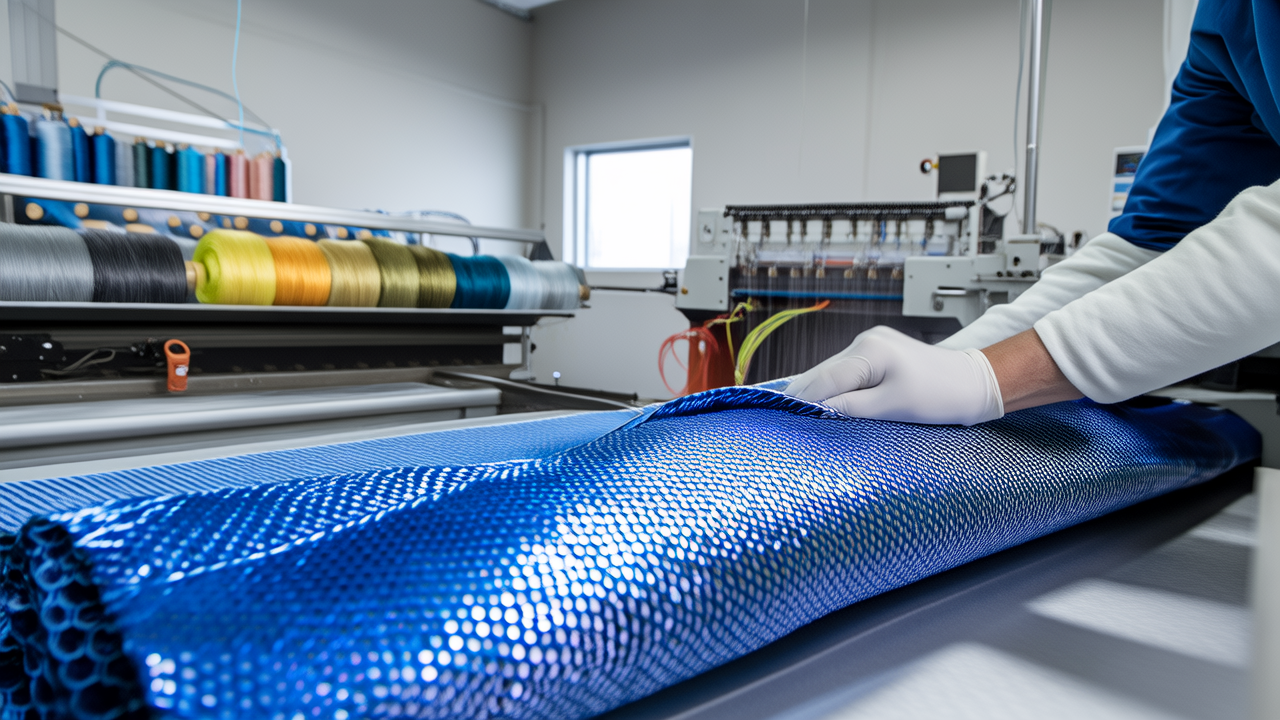
The China National Textile and Apparel Council (CNTAC) Science and Technology Awards serve as a barometer for the industry's technological roadmap. The proposed award list announced in September 2024 not only summarizes past R&D efforts but also silently defines the main battlefield for textile industry upgrades in the coming years.
From the nominated projects, technologies are highly concentrated in three areas: green dyeing and water-saving, smart manufacturing lines and inspection systems, and breakthroughs in high-performance fibers and composites. These correspond to the most pressing challenges: rising environmental compliance costs, structural labor shortages, and extreme material performance demands from downstream applications.
Green Dyeing: From Cost Center to Competitive Edge
Dyeing has long been a major energy and water consumer. Yet this year's awardees feature low-temperature dyeing, salt-free dyeing, and near-zero wastewater discharge solutions. This shift means environmental investments, once seen as forced burdens, are becoming quantifiable cost advantages. For dyeing mills, mastering low-liquor-ratio, short-process technologies gives them leverage in downstream brand ESG audits. For buyers, the 'green premium' in fabric pricing is being replaced by 'tech dividends'—the cost curve of clean production is descending.
Smart Weaving: From Machine Replacement to System Intelligence
Smart weaving awards no longer focus on single-machine automation but on data connectivity and process self-optimization across entire production lines. Technologies like machine-vision-based online defect detection and yarn tension closed-loop control essentially convert veteran operators' experience into algorithms. This is critical for small and medium-sized weaving mills facing a shortage of skilled workers. Easily deployable, low-barrier smart retrofitting solutions directly determine production stability and defect rates. Exporters should note that Southeast Asian clients are shifting from single-machine to complete-line smart solutions.
High-Performance Fibers: Accelerated Domestic Substitution
In aerospace, protective gear, and other high-end applications, awarded projects include process optimization for carbon fiber, aramid, and ultra-high molecular weight polyethylene. This signals that national demand for material self-sufficiency is moving from labs to industrialization. For industrial textile firms, this is both an opportunity and a challenge—if domestic fiber batch stability and cost control improve, they will pressure imported prices; but if quality fluctuations persist, clients will still prefer overseas suppliers.
Impact on Industrial Clusters
Award results typically trigger technology adoption waves in clusters like Keqiao, Shengze, and Nantong. For instance, after supercritical CO2 anhydrous dyeing won an award, pilot lines have been launched in Shaoxing Binhai Industrial Zone. The technology diffusion cycle from award to implementation is about 12-18 months, determining the cost structure competitiveness of local enterprises in the next market cycle.