
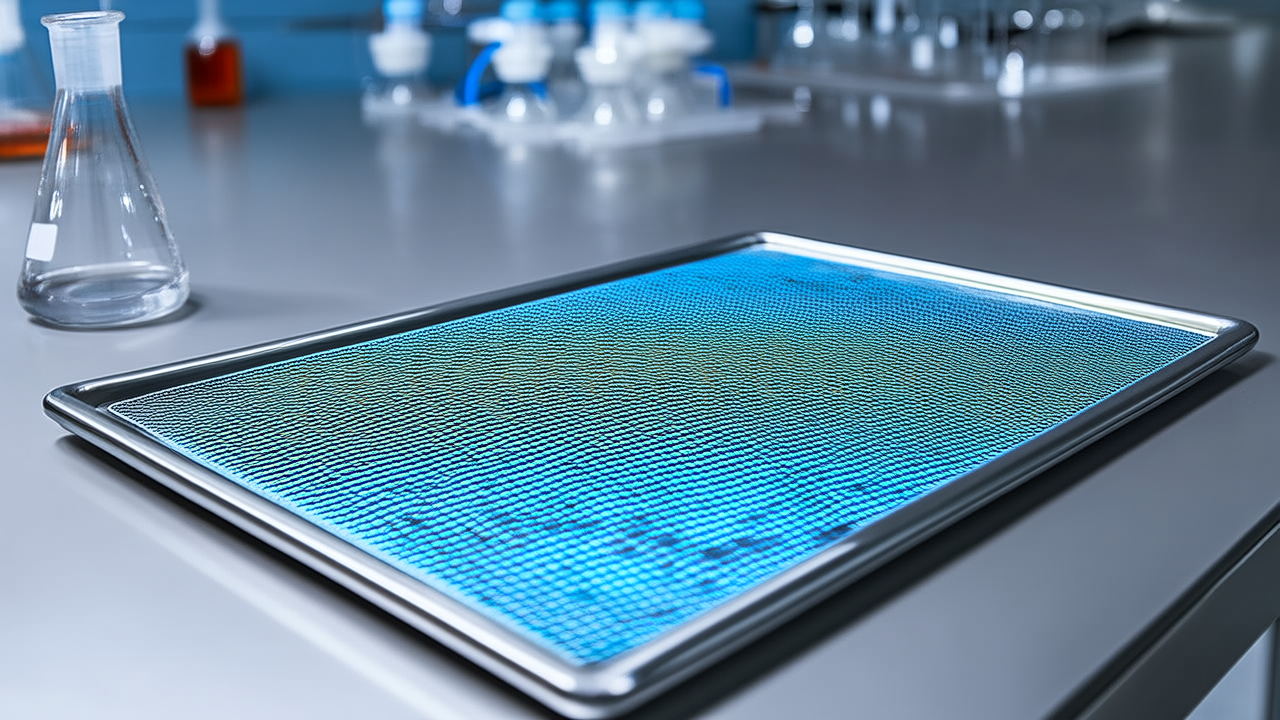
A piece of fabric as thin as a cicada's wing is no longer just material for clothing—it can now be implanted into the human body to repair the heart's "electrical circuit." The suture-free 3D conductive cardiac patch developed by Professor Mao Jifu's team at Donghua University's College of Textiles was unveiled at the 2026 China International Textile Fabrics & Accessories (Spring/Summer) Expo. This achievement pushes textile technology from apparel fabrics to implantable medical devices, sending a clear signal to the industry: medical textiles are becoming a tangible direction for traditional textile enterprises' transformation and upgrade.
Technological Breakthrough: Textile Processes Solve Medical Pain Points
Scar tissue after myocardial infarction lacks conductive function, akin to a broken circuit board, leading to cardiac electrical conduction block. China sees about 1 million new acute myocardial infarctions annually, with a five-year heart failure rate as high as 71%. Traditional repair methods rely on suturing, which risks secondary damage to the fragile heart.
The core innovation of the Donghua team lies in combining conductive fiber weaving with microstructure design. The patch's surface is covered with micron-scale conductive "barbs" that allow doctors to anchor it by pressing on the heart for just 60 seconds. The built-in 3D conductive fiber network builds a bridge for interrupted electrical signals; animal experiments show significant improvement in cardiac function within three days of implantation. This "rapid solution" has clinical value for both acute MI first aid and chronic heart failure treatment.
From a process perspective, the patch uses warp knitting technology to form a honeycomb mesh structure, with mechanical anisotropy highly matching natural myocardium. It provides mechanical support without affecting the heart's normal contraction and relaxation. This means traditional textile enterprises, if they master precision weaving and functional fiber modification, can fully enter this high-value-added track.
Market Space: A $320 Billion Blue Ocean Opening Up
The global medical textiles market has entered an explosive phase. Industry public data shows the global market size exceeded $320 billion in 2025, with China's market size surpassing RMB 85 billion, and an annual compound growth rate exceeding 10%. Among segments, implantable and therapeutic high-end medical textile materials are growing fastest, far outpacing traditional protective products, becoming the core direction for industrial upgrade.
China's textile industry possesses the world's most complete industrial chain and large-scale manufacturing capabilities, providing a foundation for medical textile commercialization. The triple dividends of an aging population, rising medical consumption, and policy support are accelerating the leap from "textile power" to "medical textile power." The launch of Donghua University's conductive cardiac patch can be seen as a landmark event in this process—it proves that Chinese textile technology can occupy a position in the global high-end medical materials market.
Industry Impact: Transformation Path from "For Life" to "For Life"
Professor Mao's team has formed a core product matrix of four items: medical sutures, ureteral stents, diabetic wound dressings, and conductive cardiac patches, all developed based on the textile technology platform. This "one process, multiple applications" model offers direct reference for traditional textile companies.
For fabric and yarn companies, the barriers to entry for medical textiles mainly involve three aspects: biocompatibility, mechanical adaptability, and functional specificity. However, core processes—weaving, spinning, and finishing—share many commonalities with conventional textile production. The key differences lie in raw material selection (e.g., conductive polymer fibers), microstructure design precision, and bio-interface modification technology. These links can be overcome through industry-university-research cooperation or equipment upgrades.
Notably, the integration of smart sensing, drug release, and tissue engineering with textile processes is accelerating. According to reports, the Donghua team has started developing a "2.0 version" smart patch that will integrate targeted drug release. This means future medical textiles will no longer be single structural supports but multifunctional platforms combining electrical signal repair, mechanical support, and precise drug delivery.