
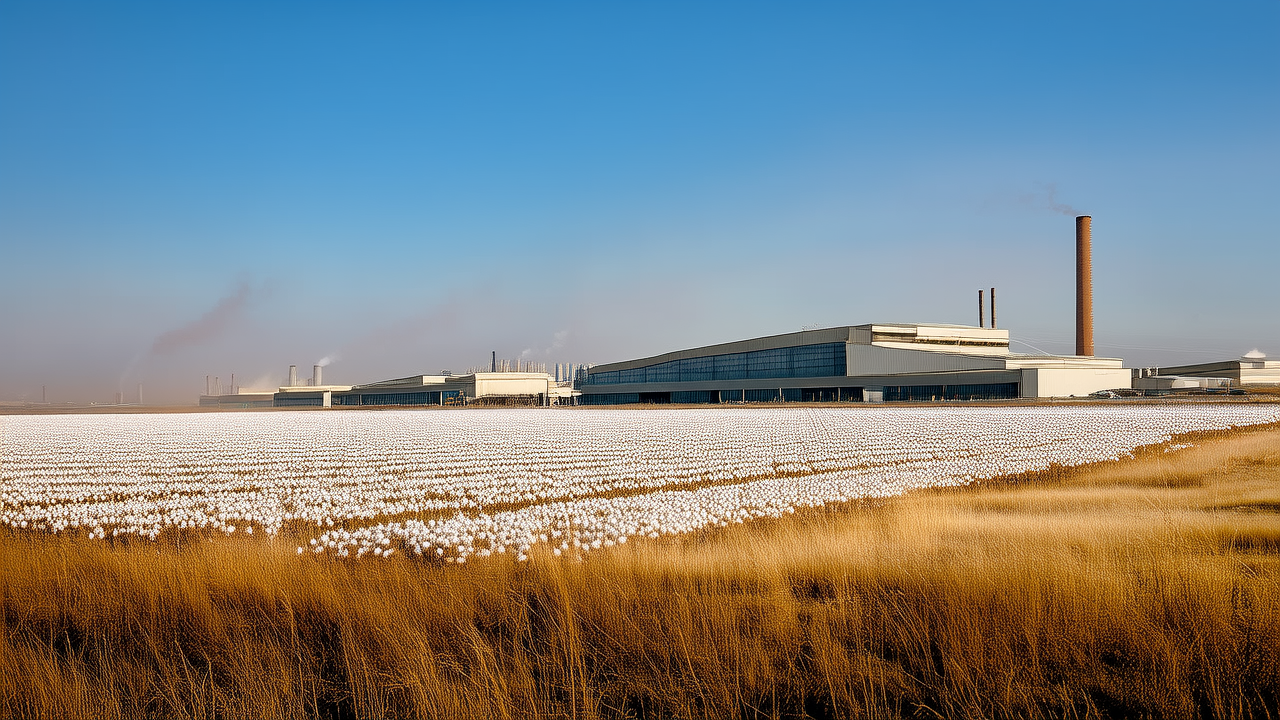
While most textile enterprises are still competing for capacity in Southeast Asia, a complete industrial chain stretching from Xinjiang into the heart of Central Asia is quietly taking shape. The $360 million cotton textile cluster project, finalized between Kazakhstan and Xinjiang Lihua Group, has moved from planning to actual production. The scale and model of this investment go beyond simple capacity transfer, pointing to a deeper trend: China's textile industry is 'relocating' its entire ecosystem to Central Asia, with Kazakhstan becoming a key pivot.
The Industrial Logic: Why Kazakhstan
Southern Kazakhstan is a traditional cotton-growing region but has long remained at the raw material export and primary processing stage, with a short industrial chain and low added value. Lihua's strategy leverages local land and labor cost advantages while circumventing trade barriers. The project plans to expand cotton planting to 52,000 hectares, introducing digital management and water-saving drip irrigation—meaning mature domestic agricultural management and equipment will be directly exported.
From a cost perspective, Kazakhstan's cotton planting costs are significantly lower than Xinjiang's, and it is geographically closer to the five Central Asian countries, Russia, and European markets. Amid ongoing restrictions on Xinjiang cotton by Western markets, production capacity in Kazakhstan can provide smoother access to these markets. This is a 'circuitous route' to bypass trade friction and a realistic choice to maintain the global competitiveness of Chinese cotton textiles.
Industry Impact: From Product Export to System Export
Two cotton processing plants are already operational, with subsequent lines for non-woven fabrics, home textiles, and garment manufacturing to be added, forming a closed loop from seed cotton to finished garments. The first phase alone will create 4,000 jobs, significantly boosting local industrial upgrading. Kazakhstan's President Kassym-Jomart Tokayev personally participated in the project negotiations, emphasizing local labor training and smart technology application, underscoring the country's urgency to introduce China's full textile chain.
For China's textile industry, this marks a qualitative shift in export models. Instead of selling fabric and yarn, the industry is now exporting factories, management, and technical standards. Lihua's approach essentially replicates the successful model of China's textile clusters—integrating planting, spinning, weaving, dyeing, and garment production in one area to drastically reduce logistics and transaction costs. Once this 'system export' model is proven, it will compete with the Southeast Asian model and reshape the textile landscape of Central Asia.