
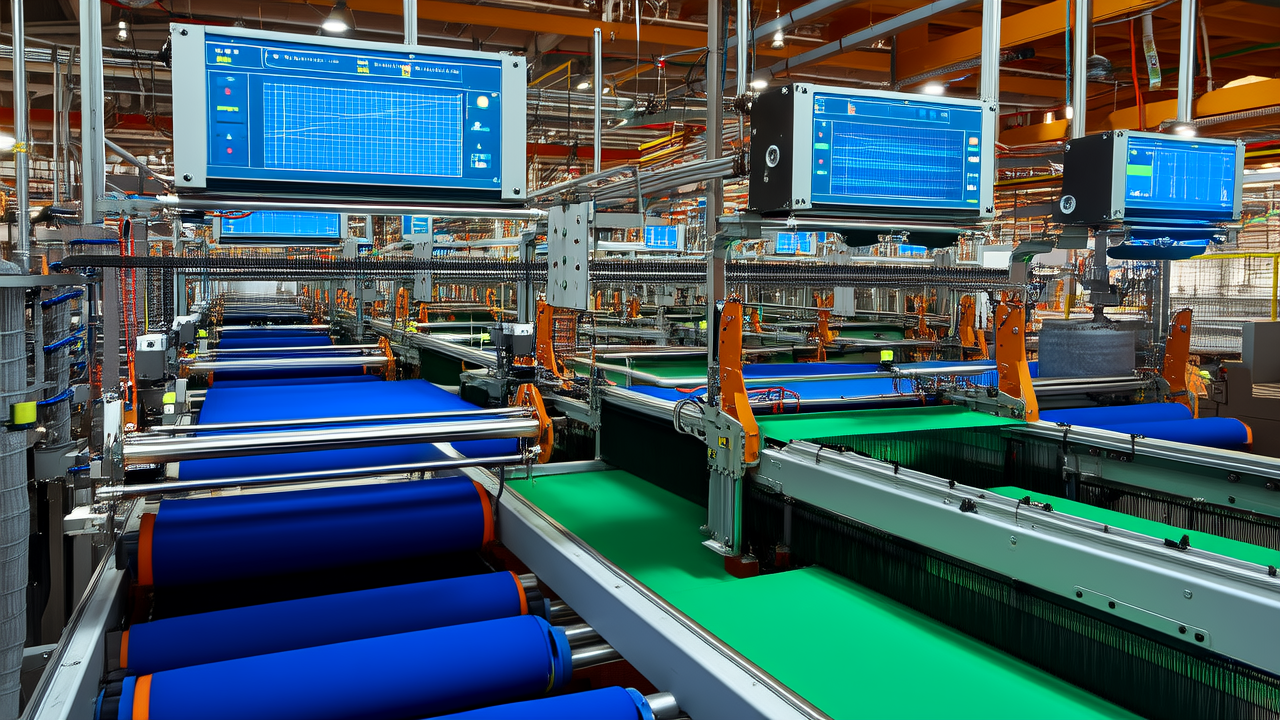
China's textile and apparel industry is reaching a milestone in digital transformation. The Ministry of Industry and Information Technology has publicized exemplary cases for 2025 Industrial Internet 'Chain-Network Synergy', with four textile and apparel projects selected, spanning AI large models, 5G smart manufacturing, full-chain digital collaboration, and smart service solutions. This collective emergence signals that the industry's digital shift has moved from isolated experiments to systematic, chain-wide deep waters.
Case Panorama: Four Breakthroughs Targeting Pain Points
The selected cases address different links:
- AI vertical large model application across the textile chain aims to bridge knowledge gaps from design to production via artificial intelligence
- 5G-based smart manufacturing chain-network synergy solutions focus on real-time production floor coordination
- Industrial Internet-enabled full-chain digital collaboration systems emphasize data flow from raw materials to retail
- Smart garment industry digital service solutions target backend service intelligence
Each case tackles long-standing industry pain points: information silos, lack of flexibility, high inventory, and slow response. The Ministry's selection criteria were clear: cases must demonstrate technological innovation leadership, high system integration, broad connectivity, and measurable 'chain-type' transformation benefits.
Chain-Network Model: From 'Point Digitalization' to 'Full-Chain Synergy'
In the past, textile enterprise digitalization often focused on single links—implementing ERP or MES systems. But these selected cases show a clear upgrade: they use the Industrial Internet as a backbone, integrating AI, 5G, and big data to connect industry, supply, innovation, and service chains. The core value of this 'chain-network synergy' model is that it no longer just improves a single factory's efficiency, but makes upstream and downstream enterprises operate like meshing gears.
What does this mean for upstream raw material suppliers? More accurate demand forecasting and faster inventory turnover. For downstream brands? Flexible production becomes possible, and applications like 3D virtual fitting significantly reduce sampling costs. For the entire industry, this synergy enables mass customization at lower marginal costs.
SME Cloud Adoption: Inclusive Logic Behind Benchmarks
The Ministry specifically emphasized 'integrated development of large, medium, and small enterprises' and 'SME cloud adoption and network usage.' This reveals a deeper policy intent: benchmark cases are not for exhibition, but to enable small and medium textile enterprises to 'copy the homework.'
For SMEs with limited capital and technical capacity, directly replicating an AI large model or 5G fully connected factory is unrealistic. But the 'application-popularization' model extracted from these cases—emphasizing good economic returns, reasonable input-output ratios, and scalable deployment—offers an alternative path. SMEs in clusters like Shengze or Keqiao can start with a lightweight digital collaboration tool and gradually connect to the chain-network system.
New Quality Productive Forces: Revitalization Logic for Traditional Industries
Textile and apparel is a classic traditional manufacturing sector, but this case selection sends a clear signal: traditional industries are not bystanders in the digital wave. The Ministry explicitly used 'new quality productive forces' as an evaluation criterion, meaning technology empowerment must not only be 'useful' but also foster new production organization methods.
In practice, the application of AI large models in fabric design and process compliance verification, and the penetration of 5G in equipment coordination and quality traceability, are reshaping the industry's cost structure. When a production line can simultaneously handle multiple small-batch orders and inventory data syncs in real-time with retail stores, the old logic of relying on scale for cost reduction is being replaced by a new logic of 'agility plus precision.'