
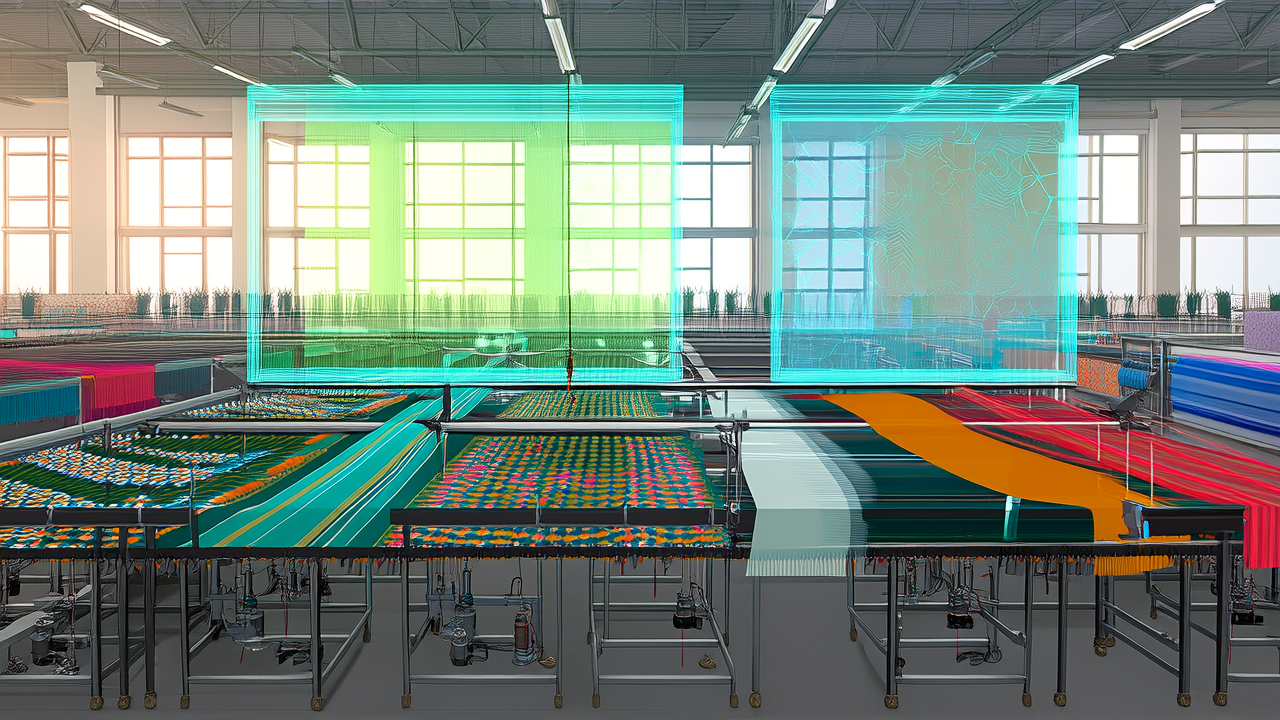
The decision-making logic behind fabric design is undergoing a fundamental shift. At the recently concluded 2026 Textile Fabric Design Innovation Conference, a clear signal emerged: the era of relying on designer intuition to 'bet on hits' is ending, replaced by a 'calculate hits' model centered on consumer data and AI algorithms.
The Underlying Shift to Data-Driven Design
A central theme of the conference was the efficiency bottleneck of traditional development models. A supply chain executive from a garment brand directly pointed out: 'The core problem with the traditional model is that consumer demand does not participate in the product development decision.' This diagnosis strikes at a chronic industry ailment—a significant disconnect between fabric development and market demand, leading to inventory pile-ups and resource waste.
Insights teams from the China Textile Information Center proposed that the industry is accelerating its upgrade to a collaborative innovation model centered on data and consumers. The specific pathway involves leveraging data insight systems to focus on directions such as efficient commuting, home healing, functional composites, and green sustainability, thereby enhancing the overall competitiveness of the supply chain. This means fabric development is no longer a 'closed-door' effort by designers but a systematic project reverse-engineered from the consumer end.
Full-Chain AI Penetration: From Planning to Marketing
AI technology was repeatedly highlighted at the conference, with its application moving from concept validation to full-chain implementation. A digital fashion designer shared practical experience: AI can provide data-driven support for seasonal product planning, improving the scientific selection of categories, colors, and materials, and facilitating the shift from experience-driven to data-driven processes.
More concrete examples came from local Keqiao enterprises. The head of a creative design company stated that AI technology has helped companies effectively reduce R&D costs in areas such as intangible cultural heritage element design, heavy-fabric color matching, and runway show effect image generation. The executive further noted that designers need to deeply integrate AI technology with traditional craftsmanship and extend the value of data into marketing and communication.
Notably, experts at the meeting unanimously emphasized that AI is an auxiliary tool, not a replacement. The designer's aesthetic judgment and creativity remain irreplaceable competitive advantages. A viable path is to train brand-specific AI models, embedding the brand's own aesthetic and identity into the output to produce designs with both personality and brand characteristics.
The Keqiao Model: Dual Drive of Talent and Digital Intelligence
This conference was a key component of the 2026 Keqiao Fashion Week (Spring). The local government's stance was noteworthy. Under the strategic vision of 'International Textile City, Smart Innovation City, and Harmonious and Beautiful Keqiao,' Keqiao will adhere to a 'dual-wheel drive' of talent introduction and cultivation, further improving talent service mechanisms and introducing market-oriented and social resources.
This aligns closely with industry trends. The concurrently held 11th (2026) Top Ten Textile Fabric Designers and Advanced Training Units Awards have for years unearthed compound fabric design talents for the industry. Since its inception in 2010, this award has recognized numerous front-line designers, solidifying the talent foundation for the quality upgrade of Keqiao and the entire industry.
Technical Landing Points for Sustainability and Functionality
On specific technical fronts, the conference provided clear directions. An expert from Donghua University's College of Textiles compared the pros and cons of various materials across seven functional indicators, including moisture regulation, wicking, and natural antibacterial properties, pointing out that sustainable technologies like fluorine-free water-repellent finishing and physical woven structure waterproofing are accelerating in R&D. This offers fabric companies a clear material selection and process optimization path for developing functional products.
Vice President of the China National Textile and Apparel Council, Yan Yan, outlined three development paths in her speech: adhere to original design and actively explore Chinese-style stylistic expression; enhance digital empowerment and actively embrace new technologies like generative AI and digital twins; and deepen brand building by strengthening quality innovation and quality management. These three points can be seen as a guiding framework for fabric enterprises in the coming years.
Industry Impact: Efficiency Gains and Decision-Making Restructuring
In summary, the impact of AI and big data on the textile industry manifests at two levels.
First is the efficiency level. The shift from 'betting on hits' to 'calculating hits' significantly reduces the trial-and-error costs of product development. Companies can establish a replicable methodology based on a three-layer screening logic: real consumer usage scenarios, unmet needs, and matching of technology and materials, thereby reducing ineffective development.
Second is the restructuring of decision-making logic. In the traditional model, fabric development often lags behind market changes. The data-driven model allows companies to capture consumption trends in real-time and directly translate insights into product definitions. As a representative from the China Textile Information Center stated, data application is shifting from basic support to deep empowerment, breaking down industry information silos.