
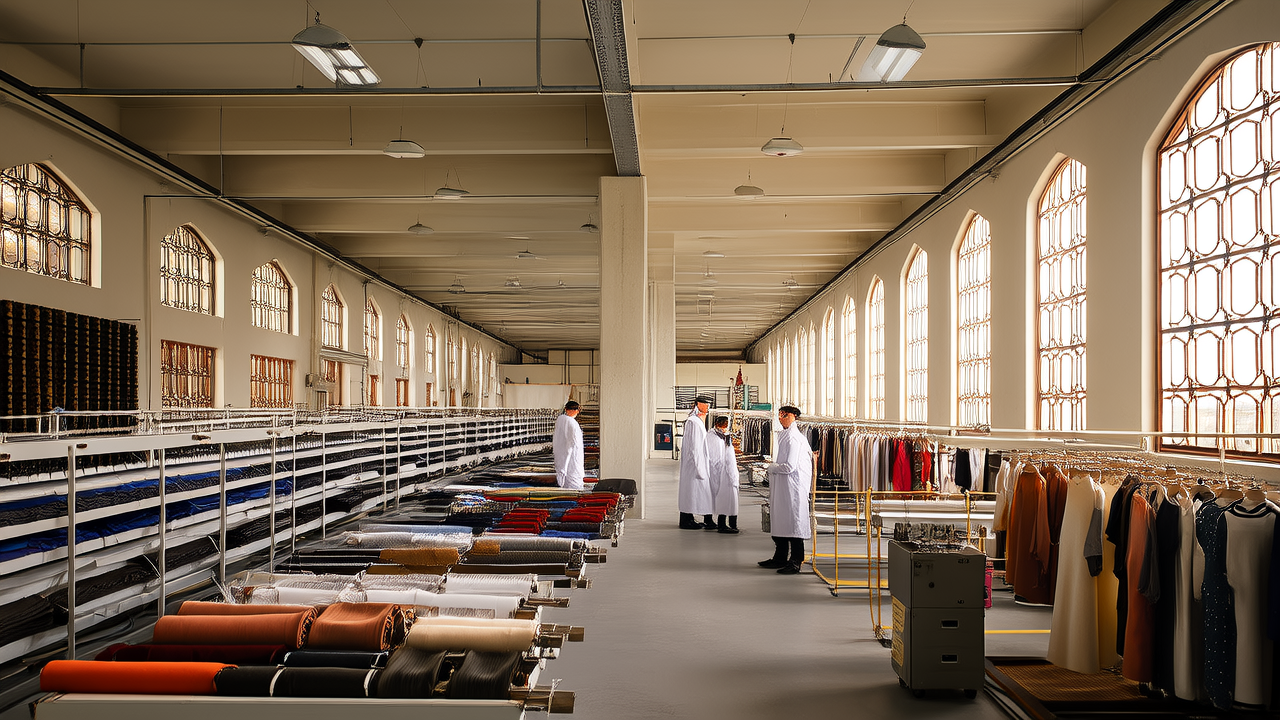
While global apparel buyers keep their eyes fixed on Southeast and South Asia, Morocco in North Africa is attempting to pry open the high-end North American market through a technical partnership. In May 2026, the Moroccan Textile and Clothing Technical Center (CTTH) signed a strategic agreement with B2B service provider Tactical Tactics in Casablanca, with one core objective: to push 'Made in Morocco' garments into the U.S. and Canadian markets at scale.
This move stems from Morocco's long-standing reliance on low-end OEM. The country's textile industry has been dominated by basic cutting, sewing, and trimming operations with low added value, and its export focus has been on Europe, leaving it poorly positioned for high-end North American channels. By entering through the technical end, Morocco signals it no longer wants to be merely Europe's 'backyard factory' but aims to build a full garment supply chain covering design, raw material sourcing, precision manufacturing, compliance certification, and cross-border logistics.
Technical Alignment and Standards Barriers
The North American market imposes stringent environmental, quality, and traceability requirements on apparel. For Moroccan factories accustomed to serving mid-to-low-end European buyers, these standards represent a significant hurdle. CTTH, as a government-backed technical body, brings strengths in R&D, training, quality control, and international certification. Tactical Tactics converts these capabilities into commercial channels through B2B platforms and trade events that connect with North American buyers.
A key focus of the partnership is to jointly optimize production and control systems so that products fully meet U.S. and Canadian market entry standards. This means Moroccan factories must systematically upgrade in areas such as fabric testing, chemical management, and labor rights audits. For Chinese fabric suppliers, this presents both a challenge and an opportunity: Morocco's domestic fabric capacity is limited, and if its garment exports grow, demand for high-count cotton shirting and functional synthetic fabrics from China could rise significantly.
Signals from the Trade Mission
Concurrent with the signing, Tactical Tactics hosted its annual '5/5 Trade Mission' in Casablanca, attracting nearly 100 North American buyers. Such a scale is unusual for North African textile trade events and indicates growing buyer interest in Morocco as an alternative sourcing destination.
Driving this trend are factors including nearshoring strategies amid geopolitical tensions (Morocco is close to Europe and has a free trade agreement with the U.S.), order diversion from rising Chinese labor costs, and investment incentives from the Moroccan government. However, it must be acknowledged that Morocco's textile industry still lags far behind China, Vietnam, and Bangladesh in production capacity, delivery speed, and worker skill maturity. In the short term, it is better suited for small-batch, high-value, flexible-delivery orders rather than high-volume basics.
Concerns and Opportunities in Transformation
The Moroccan government positions this partnership as a 'critical step toward high-end internationalization.' But transformation will not happen overnight. The industry still faces structural weaknesses including low fabric self-sufficiency, weak dyeing and finishing technology, and a shortage of design talent. Whether CTTH's technical training can quickly translate into factory-level capacity remains to be seen.
For Chinese textile companies, Morocco's pivot offers two strategic angles: first, as a 'springboard' into North America by exporting fabrics and trims to Morocco and leveraging its FTAs for re-export to the U.S. and Canada; second, as a potential competitor if Morocco successfully builds a vertically integrated garment supply chain, potentially vying for orders in niche segments like mid-range knitwear and men's suits.