
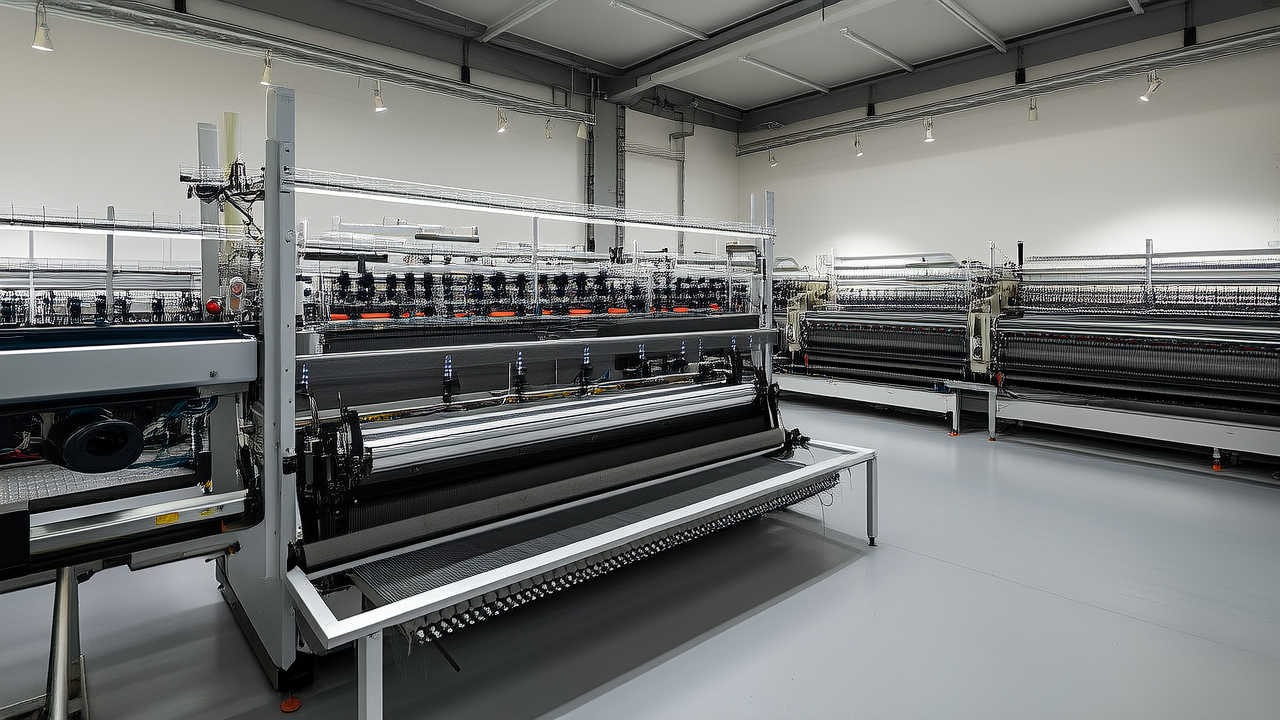
Italian textile machinery manufacturers delivered a mixed performance in the first quarter of 2026. According to data from the Italian Association of Textile Machinery Manufacturers (ACIMIT), total orders fell 5% compared to the same period in 2025. However, this seemingly modest decline masks two sharply contrasting market stories.
Domestic vs. Export: Two Different Worlds
Overseas orders contracted by 7%, indicating a notable cooling in global textile machinery purchasing at the start of the year. Meanwhile, the Italian domestic market recorded a robust 21% increase. This divergence does not simply reflect changes in overall demand volume, but rather the different cyclical phases of textile supply chains across regions.
Italy's domestic growth is largely driven by European textile companies accelerating automation upgrades and environmental retrofits. The phased implementation of the EU's Carbon Border Adjustment Mechanism (CBAM) is forcing local mills to invest in more efficient, lower-emission equipment. The overseas contraction, in contrast, is linked to a slowdown in capacity expansion in emerging economies and persistent inventory pressure in some markets.
For China's textile industry, this signal deserves attention. As one of the key export destinations for Italian machinery, Chinese mills' procurement pace for high-end imported equipment is closely tied to their own profit margins and export order sentiment. The Q1 decline in overseas orders suggests that major buyers, including China, are tightening capital expenditure.
Supply Chain Ripple Effects: From Machinery to Fabric
Fluctuations in textile machinery orders typically translate into fabric capacity and pricing changes with a lag of 6 to 12 months. Italian equipment is renowned in high-end weaving, dyeing, and finishing. A reduction in orders implies that capacity expansion for premium fabrics may slow, particularly for differentiated European products.
For Chinese fabric mills relying on imported machinery, procurement costs face two opposing forces: the uncertainty of import prices due to RMB exchange rate fluctuations, and the gradual catch-up of domestic alternatives in precision and reliability. While the short-term dip in Italian orders will not immediately alter the rigid demand for imported equipment among high-end Chinese mills, it will encourage more companies to evaluate the cost-effectiveness of mid-to-high-end domestic machines.
Notably, the growth in Italian domestic orders may enable European fabric producers to widen their technological lead over Chinese counterparts. European customer demand for certified sustainable fabrics is becoming increasingly rigid, and new machinery is a key enabler for low-energy, low-water, and chemical-recycling processes.
Market Outlook: Continued Pressure in H2
Historically, the textile machinery orders index leads fixed-asset investment in the textile industry by about two quarters. The Q1 contraction in overseas orders suggests that global machinery deliveries and installations may weaken further in the second half of 2026. However, the strong domestic performance provides a buffer for manufacturers, as domestic orders typically have shorter delivery cycles and can partially offset the cash flow impact of export declines.
For Chinese buyers, the current moment requires a more nuanced assessment of timing. If Italian manufacturers introduce promotions or extend payment terms to compete for overseas orders mid-year, a brief window of opportunity could open. Conversely, if the euro continues to strengthen, imported equipment costs will rise passively.